

Influencer marketing trends in 2026 show one clear pattern: mid-tier creators, long-term partnerships, and conversion-focused UGC content are winning, while view-chasing and one-off campaigns are falling flat, according to the campaigns we run every day.
We’re halfway through 2026, and many of the trend reports landing in marketers' inboxes right now are recycled predictions from January dressed up as fresh insight. This is not one of those.
It’s a look at the influencer marketing trends we’re actually seeing play out across our own social media influencer campaigns, the ones converting and the ones falling flat, six months into the year.
Creator tiers are shifting, and the reason is not what most brands assume
Across the influencer marketing campaigns we manage for clients, mid-tier creators with 50,000 to 500,000 followers are generating the best ROI of any tier we measure. Not because their reach is massive. It isn’t.
It’s because their audiences still offer the kind of trust usually associated with nano influencers, while their content and production quality now match what once demanded a macro-influencer-level budget.
Micro and nano influencers still matter, though. Nano influencers average an engagement rate of around 2.53%, which is far higher than most larger accounts can achieve. Micro influencers still cost meaningfully less than macro influencers to activate, and vendor pricing data suggest that gap has only widened.
That affordability shows up in acquisition costs too, and for brands serving niche audiences, that trust often matters more than raw follower count. Niche creators built around a single category convert at rates broad accounts simply can't match.
But mid-tier creators are the segment we're watching most closely right now because they combine the trust of a smaller creator with the consistency brands used to only get from macro influencers.
The brands winning with any creator tier are not treating creators like ad space. They’re building real creator relationships, giving smaller creators and mid-tier partners genuine latitude over how the message gets delivered.
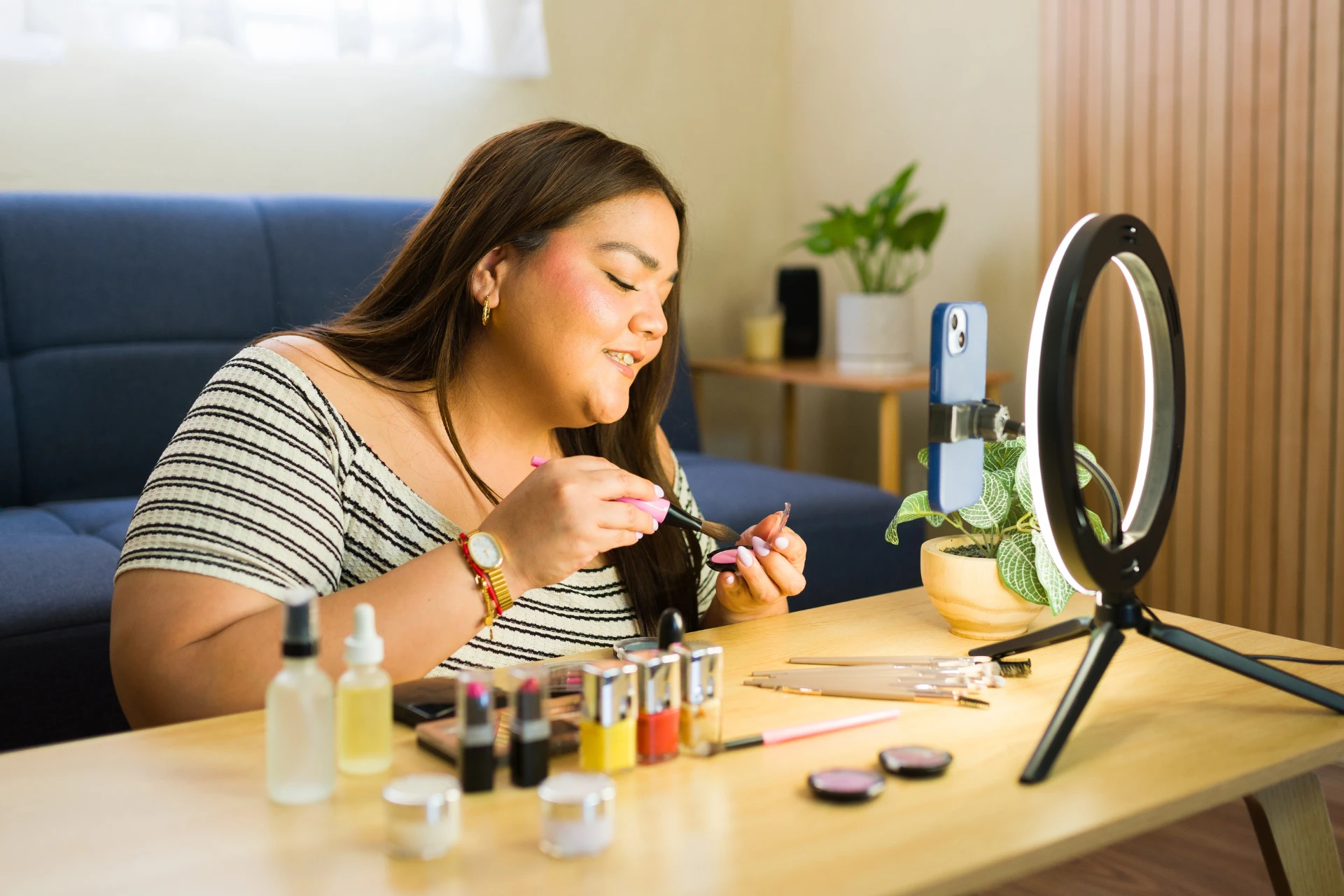
The campaigns that flop are the ones where a creator is handed a script written for traditional advertising and asked to read it into a ring light.
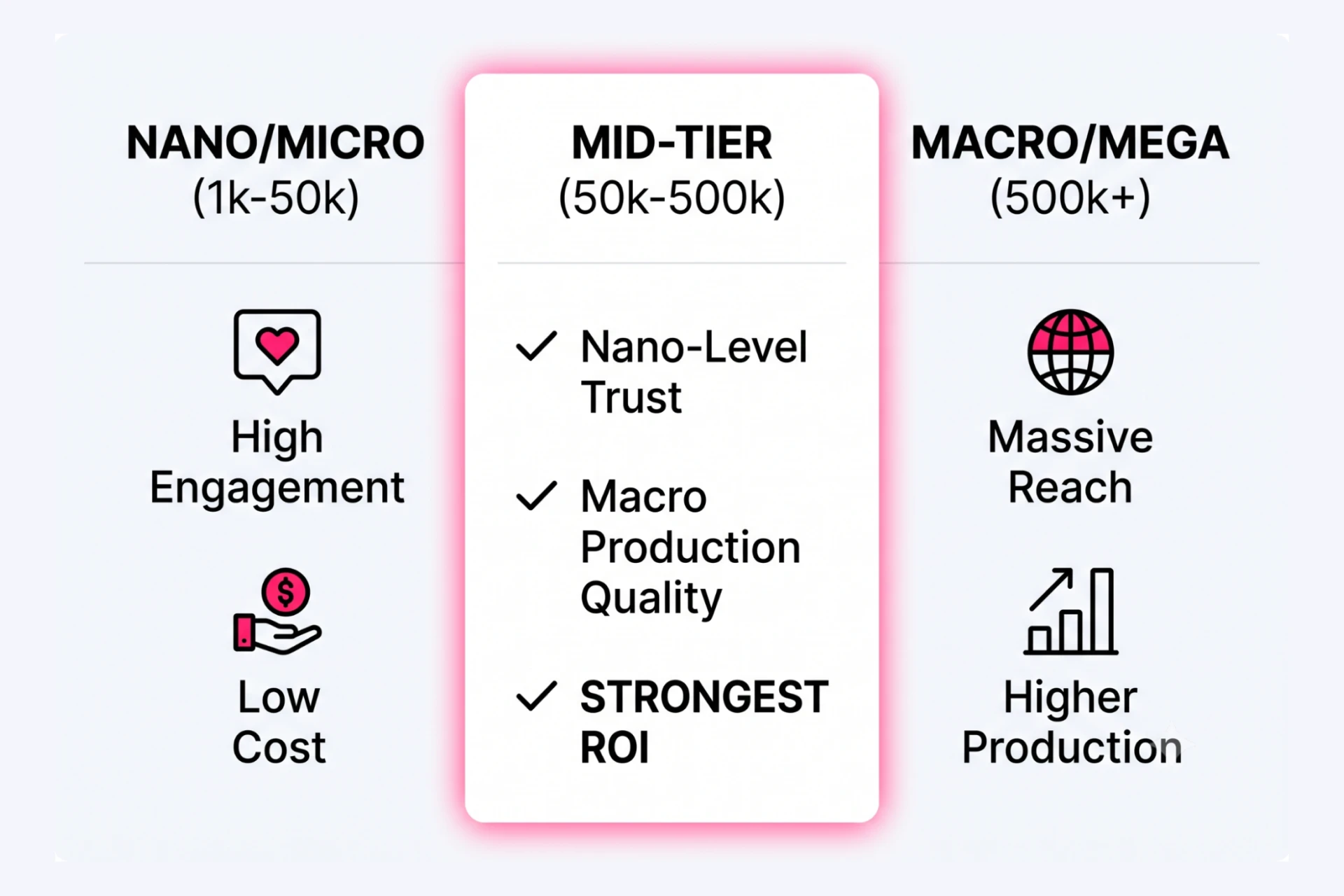
Image Source: Gemini 2026
Views don’t convert like they used to
Brands chased view counts for years because they were the easiest numbers to report up the chain. That math stopped holding up. A video can rack up millions of views and move nothing, while a much smaller clip closes sales, because attention and conversion are not the same currency.
The accounts still optimizing for views alone are the ones asking us why performance feels flat despite the reach numbers looking great.
Content built for the buyer's actual moment
What’s converting right now isn’t the influencer post pulling in the biggest view totals. It’s content designed around a precise moment in the buyer’s real purchase journey: a product demo that addresses a genuine objection, a comparison video that clearly calls out a competitor, or a creator solving an issue on camera as it happens.
This is where most brand teams misread their own data. They see a clip with two million views next to one with 40,000 and assume the bigger number means better performance.
Often, the lower-view video delivers a multiple of the click-through rate and conversions, because it met the customer at the exact stage of their decision.
Format matters less than what happens after the view
Short-form video content still dominates the format conversation, and TikTok remains where brands are concentrating investment, but format alone is no longer the differentiator.
Live shopping events are producing some of the sharpest conversion lifts we’ve seen all year as social commerce turns creator content directly into actual sales and, increasingly, direct lead generation for brands without an e-commerce storefront.
Authenticity is outperforming production value
Personal storytelling continues to beat polished, ad-style content across nearly every client vertical we work in, and it matches what we're seeing in our own campaign numbers.
Spotting that gap requires mapping the customer's journey, not just watching a dashboard. It’s a big part of why more of our clients have brought us in to map their customer journeys alongside their wider influencer marketing strategy this year.
You can’t brief a creator on a conversion moment you haven't identified, and no single channel works in isolation from the rest of the funnel anymore.

Image source: Canva
Long-term creator partnerships are winning, and the gap is widening
Roughly 70% of leading brands are now prioritizing ongoing creator partnerships over one-off activations, and that shift shows up directly in our own client reporting. The brands still running exclusively one-off deals are the ones falling behind, while the ones setting the pace run on retainers lasting six months or longer, built around a small, trusted creator roster.
The strongest creator programs treat brand partners as an extension of the marketing team, not a vendor line item.
The creator builds a genuine relationship with the audience around the product by mentioning it naturally throughout the content, rather than staging a single obviously sponsored moment. In turn, the brand gets a partner who understands the product well enough to field real objections in the comments unprompted.
None of this happens overnight, and it isn't the right structure for every campaign. One-off campaigns still have a place, particularly around a specific launch moment or a time-sensitive push.
But that's a narrower use case than most brands are treating it as, and the market is already correcting for it: a majority of marketers plan to increase creator investment in 2026, with retention and long-term partnerships prioritized over one-off activations.
That shift is already showing up in what our clients are asking for: fewer single-post campaigns, more retained rosters, and briefs built around a full year instead of a single launch. The core strategy for the second half of 2026 is to build for that shift now.
UGC is doing the paid media job influencers used to do
User-generated content is no longer a side asset alongside the paid media plan. It’s increasingly the paid media plan.
The biggest change we've seen this year isn't about which creators brands are chasing. It's that brands are moving away from chasing the single biggest influencer and toward building a full content ecosystem instead.
Rather than asking one creator to carry reach, credibility, and conversion all at once, the strongest programs now deliberately split that work: influencers drive reach, UGC fuels the paid media engine, and long-term partnerships carry credibility. No single piece of content is expected to do everything anymore.
That shows up directly in what performs. Brands are running UGC creators through paid social the way they used to run traditional ad creative, because it converts like an ad without looking like one. The audience treats it as proof rather than a pitch, which is exactly the trust gap traditional ad creative can't close anymore.
The campaigns delivering the best results this year are built around a steady stream of repurposable content, not a single viral moment, and brands treating content creation and paid media as one connected workflow are getting the most out of every dollar spent.
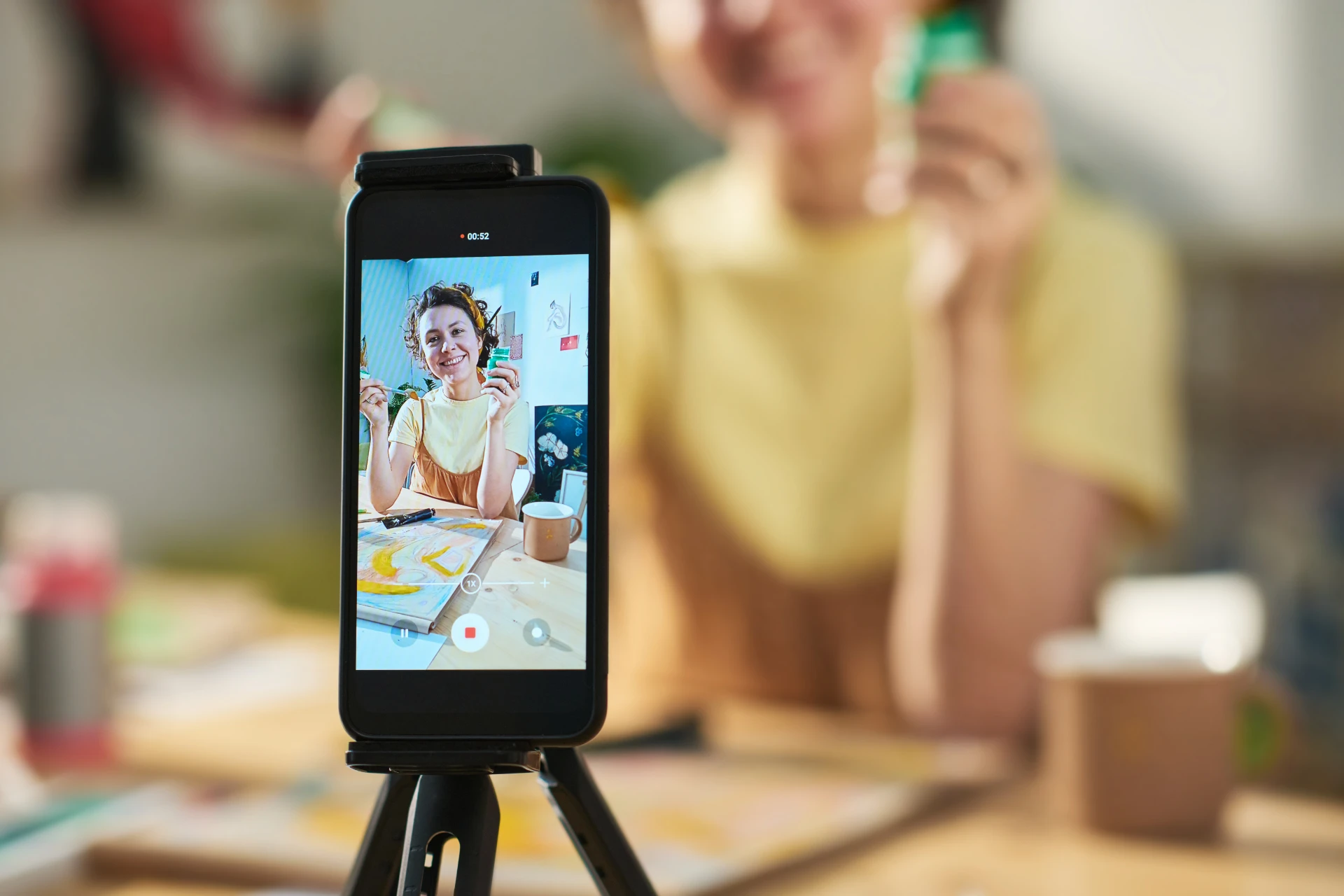
Image source: Canva
Measurement is finally catching up, and AI is doing more of the heavy lifting
This is the part of the mid-year conversation most trend pieces skip, because it’s less exciting than talking about creator tiers and content formats. It’s the most important shift of the year.
Vanity metrics are losing their grip
For a long time, influencer marketing measurement borrowed its scorecard wholesale from traditional advertising: impressions, reach, engagement rate. Those numbers still matter, but on their own they say almost nothing about measurable revenue.
Brands are prioritizing performance accountability over vanity metrics this year, and 74% report they’re actively shifting budget into creator programs as a result.
AI is replacing manual vetting and guesswork
Artificial intelligence is a major part of how that accountability is becoming possible. Fifty-nine percent of marketers are already using AI somewhere in their influencer marketing efforts, and creator discovery is the top AI use case, since manually vetting creators for fake followers and audience fit does not scale.
AI tools can now predict content performance before a single post goes live, and that predictive layer is changing how creator programs get built from the start rather than evaluated after the fact.
The disclosure line brands can’t blur
Virtual influencers are an increasingly visible part of this landscape as well, though we're still advising clients to treat them as a supplement to human creators rather than a replacement.
Audiences are more discerning than platforms give them credit for, and 78% of consumers now say clear labeling of AI-generated content is essential to trust, according to Gartner. Brands blurring that line risk exactly the kind of brand-reputation damage this industry can't afford right now.
Measurement built to be read by machines, not just people
This is also where AI integration has genuinely changed what’s possible for our clients. AI is becoming an effective means of shortening the content creation process, not replacing the creator.
We use AI-driven marketing tools designed to track how creator content performs not only on its own social channels but also as part of the customer discovery and evaluation process, including when that content surfaces in response to an AI assistant's recommendation.
That last piece matters more every month. If your influencer content is not built to be legible to answer engines the way it needs to be legible to a human, you’re already behind. Our answer engine optimization work exists precisely because this shift is no longer optional anymore.
Brands still reporting success purely on engagement rate are not measuring wrong exactly. They’re measuring incompletely. Incomplete measurement is how good campaigns get canceled, and mediocre ones get renewed.
"The biggest shift we've seen this year is that brands are moving away from chasing the biggest influencers and toward building content ecosystems,” says Jackie Tambosso, Director of UGC & Influencer Marketing at The Influence Agency. “Instead of asking one influencer to do everything, the strongest programs combine influencers for reach, UGC for paid media, and long-term partnerships for credibility. The campaigns that perform best aren't built around a single viral moment. They're built around consistent content that can be repurposed across channels."
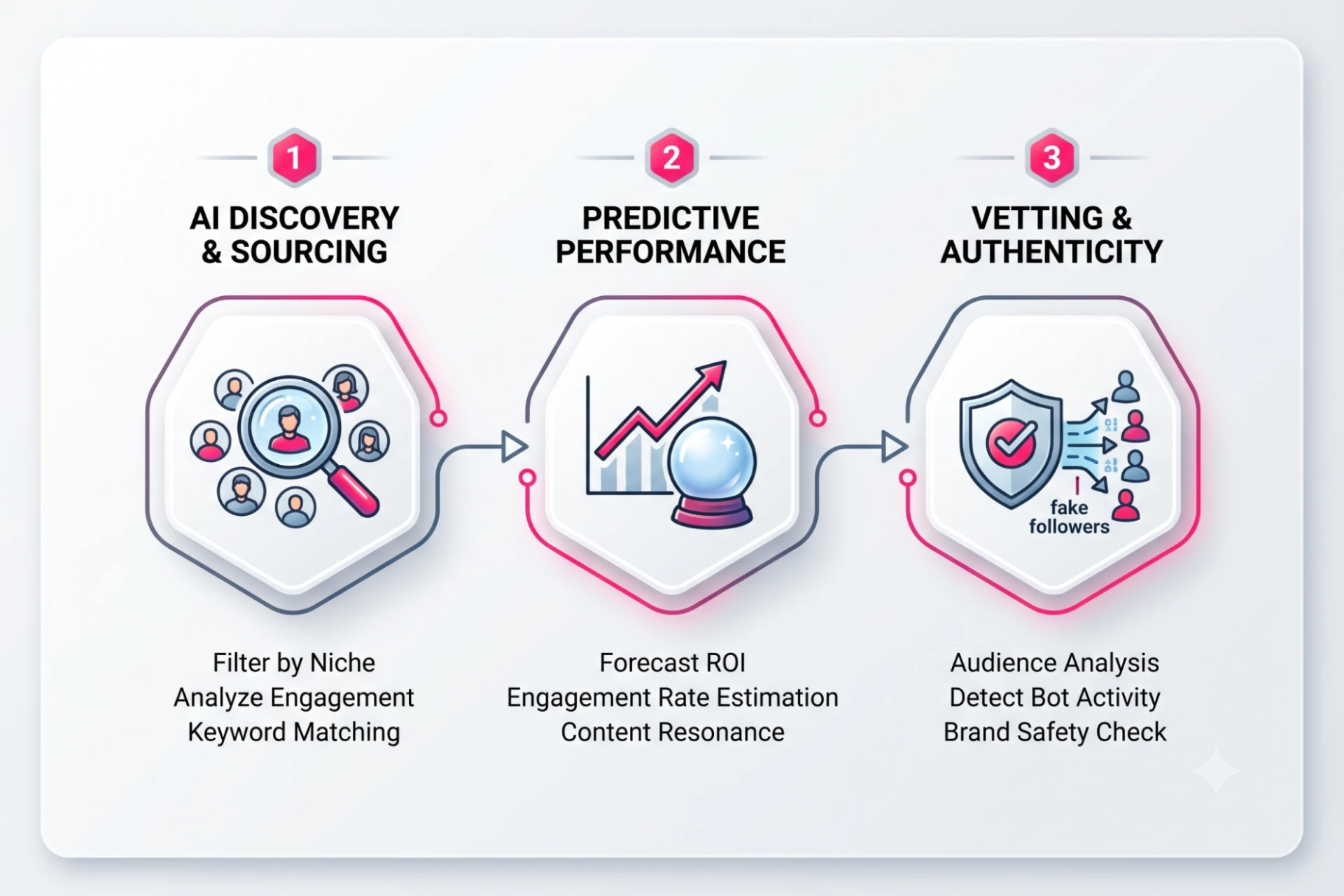
Image Source: Gemini 2026
What to do differently for the rest of 2026
None of this requires waiting for a January reset. If your current influencer marketing strategy is still built around one-off campaigns, top-line view counts, and engagement rate as the only scoreboard, the second half of the year is the moment to change that, not next year's planning cycle.
Start by auditing your creator program against the tier performance we described above. Look at whether your best-performing content this year was built around a real conversion moment in the customer journey or just a big number. And ask whether your measurement framework can actually separate the two.
Our guide to running an influencer campaign that actually works gives you the operational playbook. What we’ve described here is the strategic shift underneath it.
FAQs about influencer marketing trends
Key takeaways
This is what we'd build for your brand next
We built this piece on the influencer marketing campaigns we’re actively running. If you want that same data and strategy behind your own brand for the rest of 2026, that conversation is exactly what our team has every day.
Let's talk about what would actually move the needle for you.