

The map no longer works
Picture the marketing funnel. You've probably built campaigns around it, mapped content to it, and reported against it. Awareness at the top, consideration in the middle, conversion at the bottom. Clean, logical, useful.
Now, picture that funnel printed on paper. Crumpled, torn into pieces, and handed, one scrap at a time, to millions of different people who each tape their piece to a different wall.
That's what media fragmentation looks like in practice. In 2026, it's the operating condition of modern marketing.
We ran our own consumer trends survey earlier this year, and the results were clear: 83% of respondents say how they discover new products or brands has changed in the last two years. Not tweaked. Not shifted slightly, but outright changed.
The path your customers are walking today looks almost nothing like the one you mapped your marketing efforts and advertising strategies around.
According to a 2026 study from programmatic media firm MiQ (based on an analysis of 53 million households and more than 700 trillion data signals), nearly half of consumers now describe their path to purchase as random.
Discovery, research, and transaction are increasingly happening within the same digital environments, often within minutes of each other. The tidy, predictable funnel that structured marketing strategy for two decades isn't just outdated; it's been replaced by something messier, faster, and far more human.
The question isn't whether media fragmentation is happening. It is. The question is what you do about it.
How media fragmentation happened
Let's be clear about the cause. This isn't a consumer behavior mystery. It's the predictable output of a decade of algorithmic personalization, scaled by AI.
Every platform, every feed, every search result is now tuned to the individual. Two people in the same city, same age bracket, same income range can open Instagram and see entirely different versions of the world. Not slightly different. Entirely different. The content, the creators, the brands, the cultural references: all personalized, all divergent.
That was the promise of the personalization era, and it delivered. McKinsey research shows companies that do personalization well generate 40% more revenue than their peers. But content personalization also shattered the shared consumer journey that made mass marketing legible. There’s no longer a common entry point, no single discovery moment. No predictable handoff between awareness and intent.
Layer on top of that what writer Cory Doctorow has named enshittification: the process by which digital platforms that once prioritized user experience have systematically degraded that experience in pursuit of revenue:
The open, discoverable internet of a decade ago has become a series of walled gardens, each with its own logic, its own rules, and its own data:
AI accelerated everything. Content volumes exploded, and audience fragmentation deepened.
The distance between a brand and its customer got wider, stranger, and harder to map.
The scrapbook consumer
Here's what media fragmentation looks like from the consumer side.
Someone discovers a brand on TikTok, half-watching while doing something else. They screenshot it. Two days later, they Google the brand name while waiting for coffee. They read a Reddit thread. They ask an AI assistant. They see a creator they trust mention it in a YouTube video. They go back to the screenshot. They buy.
Or they don't.
Maybe they get distracted at the Reddit thread and end up somewhere else entirely. Maybe the AI assistant mentions a competitor. Maybe the creator's video is three months old, and the product is out of stock.
This isn’t an edge case or outlier behavior. In TIA's own 2026 consumer survey, 91% of respondents said they save, screenshot, or bookmark content to come back to later. Sixty-eight percent say they do it all the time.
The journey from first awareness to conversion is no longer a straight line. Rather, it's a scrapbook: assembled from pieces collected across numerous platforms, formats, and moments, in an order no brand planned and no funnel predicted.
The consumer is the curator now.
They collect pieces of your brand and arrange them according to their own logic. Your job is to give them pieces worth keeping.
Why audience fragmentation is making brands incoherent
Most brands are still operating as if the funnel is intact. They're running awareness campaigns on one social media platform, conversion campaigns on another, creator content on a third, and email nurture on a fourth. Each piece is optimized for its channel. None of them is designed to work together in the hands of specific audience segments as they assemble their own journey.
The result is incoherence. Not bad individual pieces, necessarily. Just pieces that don't hold together. A brand that sounds urgent on paid, considered on YouTube, playful on TikTok, and corporate in email isn't running a multichannel strategy. It's running four different brands without realizing it.
Even when a consumer does find you, the trust gap is real. In TIA's 2026 consumer survey, when asked who they trust most for product recommendations, only 16 out of 336 respondents said the brand itself. Meanwhile, 117 named someone in their personal network, and 76 pointed to a small niche creator who focuses on a topic they care about. Brands aren't losing the battle for attention alone; they're losing the battle for credibility.
Only 43% of marketers say they’re confident in their ability to measure campaign performance across fragmented media channels, according to MiQ research. But the measurement problem is a symptom, not the cause. The cause is that most brands haven't updated their operating model for a fragmented environment. They're still trying to control a journey that consumers are now building themselves.
Coherence, the ability to be recognizable and resonant across every platform and every moment a consumer encounters you, is the new competitive advantage. Not reach. Not frequency. Not the size of your media budget. Coherence.
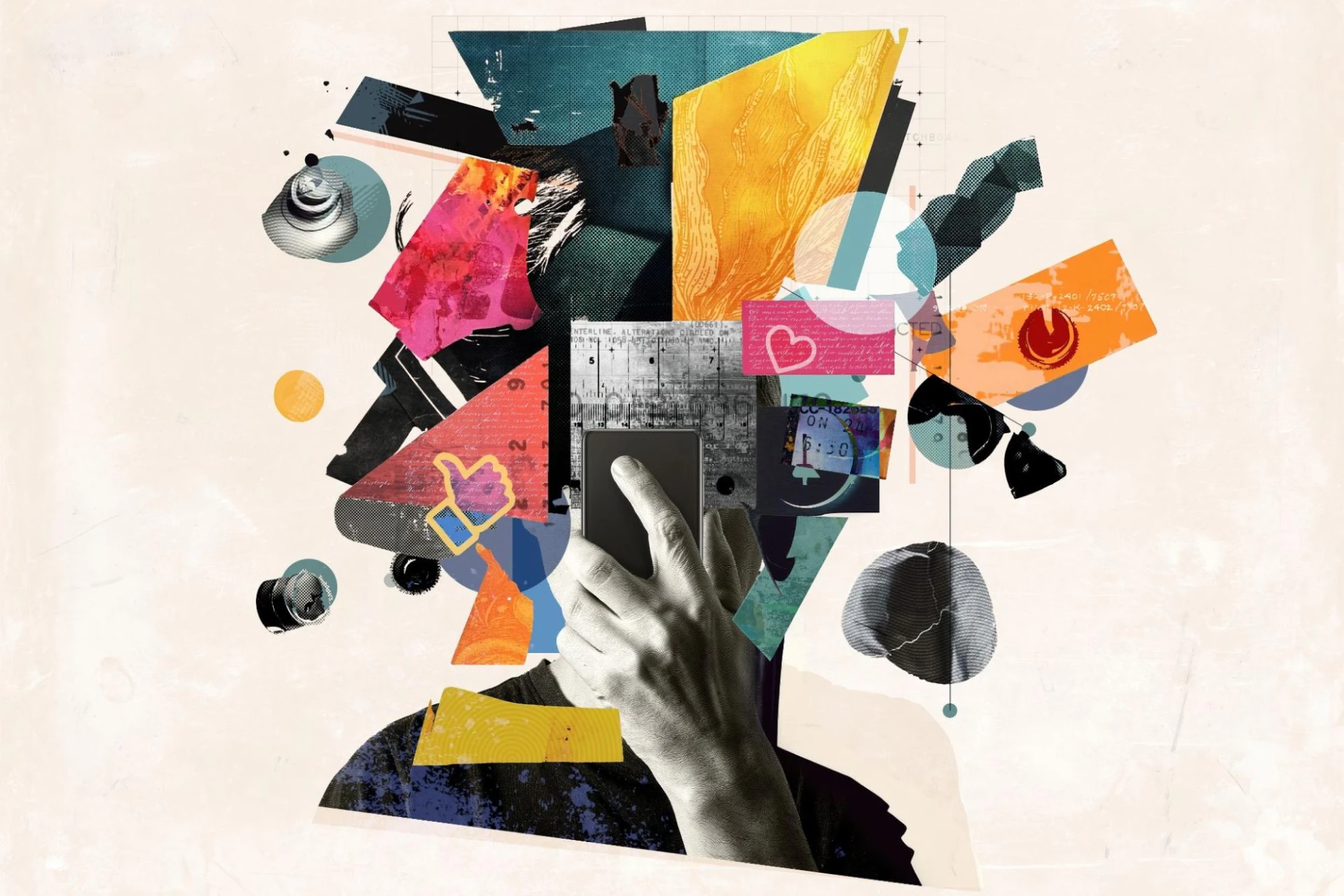
Image Source: Shutterstock
What a media fragmentation strategy requires
The brands winning in a fragmented environment aren't the ones broadcasting the loudest. They're the ones whose pieces hold together even when a consumer only finds one piece.
Think about what that requires.
Every piece of content has to work as a standalone artifact, because you can't guarantee the order in which fragmented audiences will encounter it. Every platform presence has to feel native to that platform but continuous with the brand everywhere else. Every creator partnership has to extend the brand's coherence into communities you can't fully control.
It requires moving from campaign thinking to ecosystem thinking. From funnel management to thread management. The question stops being: how do we move this person through our funnel? It becomes: how do we make sure that whatever piece of us they find first, they can follow the thread back?
That thread is the consistent signal running through everything you make and everywhere you show up, and it’s what survives fragmentation and becomes audience insight. It's also what's hardest to build when you're still thinking in traditional media channels rather than in coherence.
Frequently asked questions about media fragmentation
How The Influence Agency is thinking about this in 2026
We've spent the last year building a strategic framework specifically designed for the media fragmentation era. Not a retrofit of old models. A new architecture, one that starts with the reality of audience behavior, instead of demographic assumptions, maps the pieces of your brand presence to the moments where consumers are collecting them, and builds the connective tissue that makes a fragmented experience feel coherent.
Over the coming months, we're publishing our thinking across the forces reshaping how brands get discovered, trusted, and chosen in 2026:
- The behavioral shifts underneath generational labels
- The new roles platforms are playing in real time
- The content behaviors replacing the feed scroll
- The influence architecture that has replaced the hierarchy
Plus, the framework that holds it all together.
If your brand is feeling the friction of media fragmentation (most are), this series is for you. The map doesn't work anymore, but there’s a new way to navigate.
Want to talk about how media fragmentation is affecting your brand?
The Influence Agency partners with brands across North America to build marketing strategies for the fragmentation era. Reach out to start a conversation.