



Financial services often face strong consumer doubt, tight regulatory rules, and lengthy decision cycles, so one-size-fits-all marketing usually falls flat. Marketing succeeds when firms blend educational insights, compliant communication, and data-informed personalization to earn trust and deliver measurable growth for financial institutions
Financial services companies ask for something most industries never have to: hand over your money and entrust your economic future. That’s a much bigger ask than clicking "add to cart," which is why digital marketing for financial services has to work differently from almost any other industry.
But does it work? Only when the strategy is built around the realities of the financial services industry, things like regulatory compliance, long consideration cycles, and audiences who are actively looking for reasons not to trust you.
At TIA, we break down what effective marketing for financial services actually looks like, and why the generic playbook falls short.
Why marketing for financial services is hard
Most industries can rely on impulse, urgency, or emotion to drive sales. Financial services firms rarely get that luxury.
The trust barrier
Whether you run a fintech startup, a credit union, or a wealth management firm, prospects size you up through a lens of built-in doubt.
Global trust in the financial services sector sits at 63%, down a point from 2025, according to Edelman's Trust Barometer. That means over one-third of prospects start the relationship questioning your credibility.
Generic messaging makes that worse: to an audience already primed to doubt you, it reads as proof you don't understand them. And that risk is only growing: 72% of banking customers say personalization is highly important to them, which makes one-size-fits-all messaging a liability, not a safe default.
That's why financial marketers have to do double duty: educate and reassure, not just sell.
Longer, more complex buying journeys
Choosing a bank, an insurer, or an investment platform is not a same-day decision. B2B buyers in financial services, in particular, often evaluate providers for months, working with compliance, procurement, and legal teams before committing to an agreement. Financial institution marketing must serve the full decision journey, not only the final conversion point.
Compliance shapes every campaign
Every ad, client quote, and social post a financial brand publishes has to clear legal and compliance review before it goes live, and the rules aren’t optional extras: Google requires financial advertisers to disclose fees, and firms must meet federal and state compliance laws that shift by product, audience, and platform.
A legal team reviewing every asset can slow campaigns down, but skipping that step isn’t a real option. And that’s where most firms get stuck: they treat compliance as a brake on marketing.
The ones that win treat it as part of the build from the start, not a last-minute obstacle, and it shows in the output. Consumer-friendly language paired with proper disclosures consistently outperforms content that hides behind jargon and dense fine print.
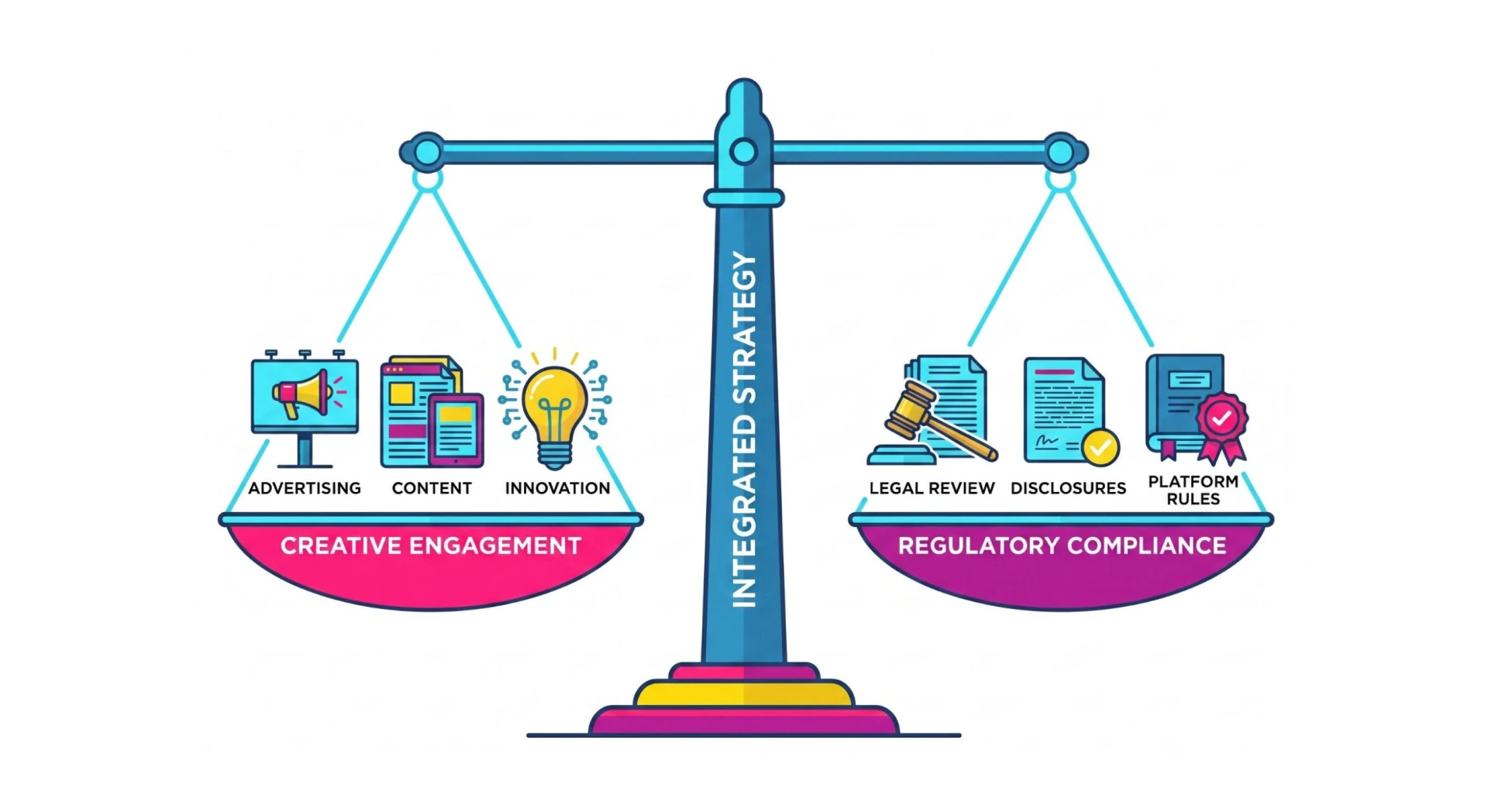
Image Source: Gemini 2026
What works in financial services marketing
Despite the added complexity, digital channels can absolutely move the needle when the strategy considers these realities.
Content that answers real questions
Financial buyers, individual consumers, and B2B decision-makers alike search for answers before searching for a brand. That’s where content marketing does its best work: blogs, guides, and explainer videos that tackle specific pain points build credibility long before a sales conversation starts.
It’s also where SEO and AEO matter most. Detailed, question-driven queries like these are exactly what AI-powered search tools are built to surface.
Personalized content that meets buyers where they are
Generic content stops working the moment a prospect moves past the awareness stage. Tailoring by audience segment, product interest, or customer journey stage turns a broad educational strategy into something that feels built for the person reading it.
A first-time homebuyer researching mortgage options needs a different message than a small business owner evaluating commercial lending, even when both sit in the same funnel stage. Financial institutions that segment this way build stronger engagement than those running one message for every audience.
That kind of targeting only works paired with real data privacy protections, especially in an industry where people already worry about how their financial data gets used. The firms that get this right treat privacy as part of the value proposition, not a compliance checkbox bolted on afterward.
Influencer and creator partnerships, done carefully
Influencer marketing might not be the first channel that comes to mind for financial services, but it’s increasingly effective, particularly for fintech and consumer-facing financial products. The trick is finding credible voices, financial educators, small business owners, and industry experts who can speak to a product authentically rather than reading a script.
Financial offerings need trustworthy storytelling backed by clear, concrete evidence, because people are often skeptical in this category. Credibility matters even more in an industry where audiences expect slick marketing to be misleading.
Paid media built for the funnel, not just the click
A single paid ad rarely converts a financial services lead. What works is a full-funnel approach:
- Awareness efforts that introduce your value proposition
- Retargeting that cultivates prospects through a longer decision cycle
- Conversion campaigns that communicate directly to the specific financial product a prospect has shown interest in
Email marketing deserves a specific mention here, too. It remains one of the highest-ROI tools available to financial marketers, particularly for developing leads not yet ready to convert, with an average return of $36 to $42 per $1 spent.
Web experiences that build confidence
A financial institution's website is often the first real proof a prospect sees: site speed, clear navigation, and transparent information all signal legitimacy. If it looks outdated or is hard to navigate, it undermines every other upstream marketing effort, including the content and paid media that work to bring people there in the first place.
Bringing everything together with a full-service strategy
None of these channels performs in isolation. The financial services providers that see real results treat marketing as one coordinated strategy, where SEO informs content, content informs paid targeting, and every touchpoint reinforces the same message of credibility and expertise.
That’s exactly the kind of work our team does for financial brands, drawing on the same content marketing and SEO strategy expertise that supports clients across other regulated and relationship-driven industries.
If you want to see how a coordinated, compliance-aware approach to marketing for financial institutions can drive real growth, our financial services marketing specialty page covers how we approach this work.
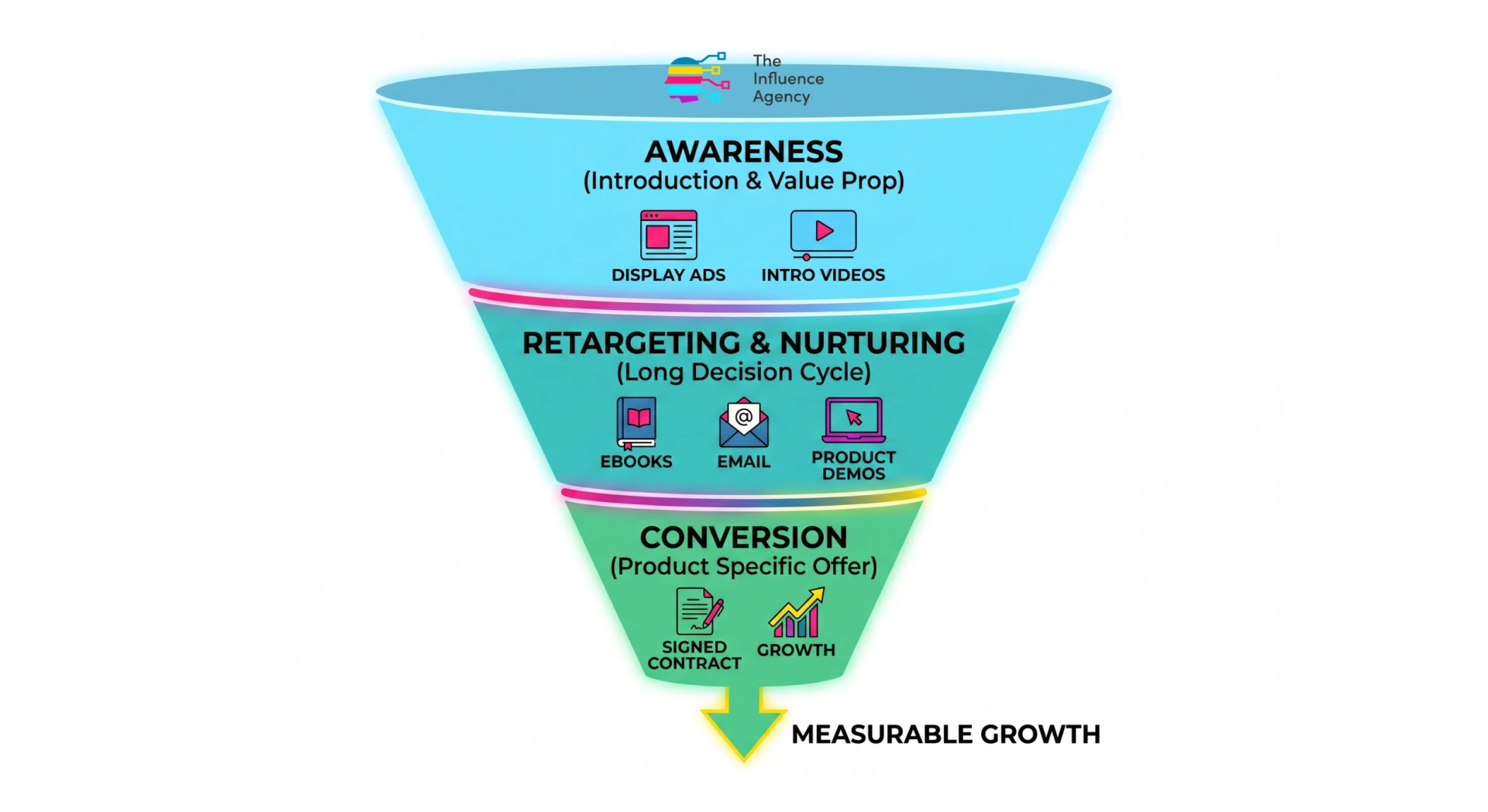
Image Source: Gemini 2026
FAQs about marketing for financial advisors and institutions
Key takeaways
Ready to build trust and encourage growth?
Digital marketing for financial services absolutely works, but it demands more precision, more patience, and more nuance than most industries require. The firms that succeed are those prepared to invest in a strategy designed for their audience, regulatory realities, and buyer journey.
If you're ready to explore what a customized approach could look like for your institution, our team at The Influence Agency is here to help you build a strategy that earns trust and drives measurable business growth.
Let's talk about what's possible for your brand.