


Build a portfolio of spec content, choose a niche where brands are actively spending, set up your profiles, create a media kit, and start pitching. UGC creators don’t need a high following because brands aren't buying your audience. They're buying a content asset they'll use in their own ads, product pages, and email campaigns.
The future of content creation is user-generated. Seventy-one percent of online shoppers say customer reviews and user-generated content directly influence whether they complete a purchase. That’s how you know this marketing strategy is here to stay.
Interested in being one of the creators at the forefront of it all? Here at The Influence Agency, we’ll show you how to get started as a UGC creator.
What is UGC?
UGC stands for user-generated content, which refers to photos, videos, reviews, or testimonials (or any other content) created by real customers or users. It's one of the most effective forms of social proof in marketing, and consistently more persuasive to buyers than anything a brand writes about itself.
Many brands actively work with content creators to produce authentic, conversion-focused content at scale for ads, landing pages, and campaigns. When done well, it's indistinguishable from the organic kind. And that’s why user-generated content creators are in such high demand!
What is a UGC creator?
A UGC creator is someone who makes authentic content that showcases a brand or a product. Most are unpaid, everyday customers and brand advocates who post honestly about products they use. Brands often repurpose this organic content on their own channels, typically crediting or tagging the original creator.
The paid side of UGC works differently:
- Commissioned UGC creators are hired specifically to produce content for a brand's ads, product pages, or social media campaigns.
- That content is shared through the brand's channels, not the creator's own platform.
- Contract terms vary, but brands typically retain usage rights, and paid creators are required to disclose their brand relationship per Federal Trade Commission (FTC) guidelines.
- Most UGC content creators work freelance, often alongside influencer or other creator work.
Learn more: Guide to UGC Content Marketing
UGC creator vs. influencer
Influencers are paid for their reach; UGC creators are paid for their content.
When a brand works with an influencer, they're buying access to an audience. When they hire a UGC creator, the deliverable is the content itself, which means follower count is largely beside the point, and the skill that gets you hired is knowing how to make branded content feel organic.
But increasingly, brands are hiring hybrid creators: people who can produce UGC and share it with their own audience. In that case, the creator posts it, usually with a usage rights agreement that covers both the deliverable and organic distribution.
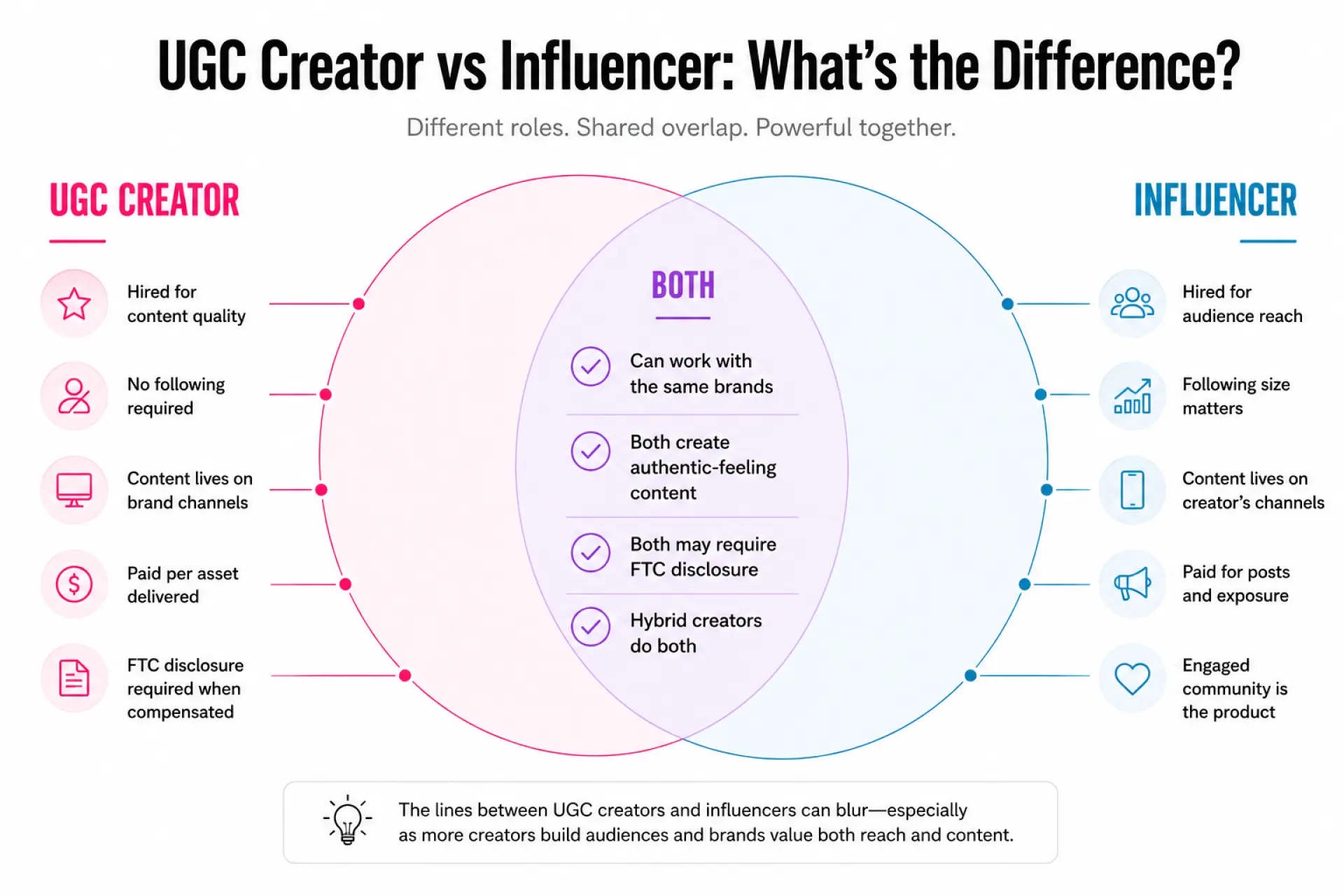
Image Source: ChatGPT, 2026
What brands and agencies look for in a UGC creator
Brands and agencies look for authenticity, strong product demos, clean visuals, and a creator who can reliably follow a brief. They also value clear communication, fast turnaround, and content that feels natural rather than overly polished.
More specifically, they want creators who can:
Tip: Many brands now work with a small, trusted roster of creators on an ongoing basis rather than hiring one-off. Reliable delivery and consistent performance are what get you into that rotation (and keep you there).
How to become a UGC creator: Step-by-step guide
To become a successful UGC creator, you need to:
1. Choose your industry
Your niche determines which brands find you relevant. It helps to be genuinely interested in the category; content that feels forced usually reads that way on camera. However, consider where brands are actively spending on UGC.
Some industries are harder for UGC creators to break into because they either require strict legal approvals, rely more on technical or B2B marketing, or only run campaigns seasonally. These factors reduce both the volume of work and the demand for creator-style content.
In general, if a brand rarely uses social-first advertising, has strict compliance requirements, or doesn’t consistently invest in paid content, it’s usually a less reliable niche for UGC work.
Tip: Before committing to a niche, spend ten minutes in the Meta Ad Library searching brands in that category. If brands are running UGC-style video ads at scale, there's active demand. If you only see polished brand creative, the budget may not be there yet.
2. Set up profiles and signal you’re open for work
Before pitching, ensure brands can find you and immediately understand what you do. Your social profiles are your storefront; they should make it obvious that you're a UGC creator available for work.
A few things to get in order:
- Add "UGC creator" to your Instagram and TikTok bios. Brands and agencies actively search for this term when scouting creators.
- Include a portfolio link in your bio. You can link a Google Drive folder, a Canva project, or a simple website. Or you can link a UGC platform profile, such as Contra, Influee, or JoinBrands.
- Post content that demonstrates your range. Your feed doesn't need to be perfect, but it should show that you understand how to film, structure, and deliver on-brand content.
- Set up a LinkedIn profile. Higher-value brand contacts and agency partnerships often come through LinkedIn rather than Instagram or TikTok DMs.
3. Build a UGC portfolio
Start by creating authentic UGC content. Spec content (videos you create for real products you own, without a paid partnership) is standard practice for new creators and widely accepted by brands.
A few tips:
- Film products you use. Genuine familiarity with a product comes through on camera in ways that scripted enthusiasm doesn't.
- Shoot in good light with clean audio. Content quality signals professionalism. A recent smartphone in natural light is enough; you don't need a camera kit.
- Create videos in varying formats. Include at least one talking-head video, one voiceover demo, and one lifestyle-style clip to show your range.
- Structure each piece intentionally. Every video in your portfolio should demonstrate that you understand conversion, not just aesthetics.
- Look at UGC examples in your chosen niche to see what successful creators do. Pay attention to pacing, hooks, and video editing styles that invite high customer engagement.
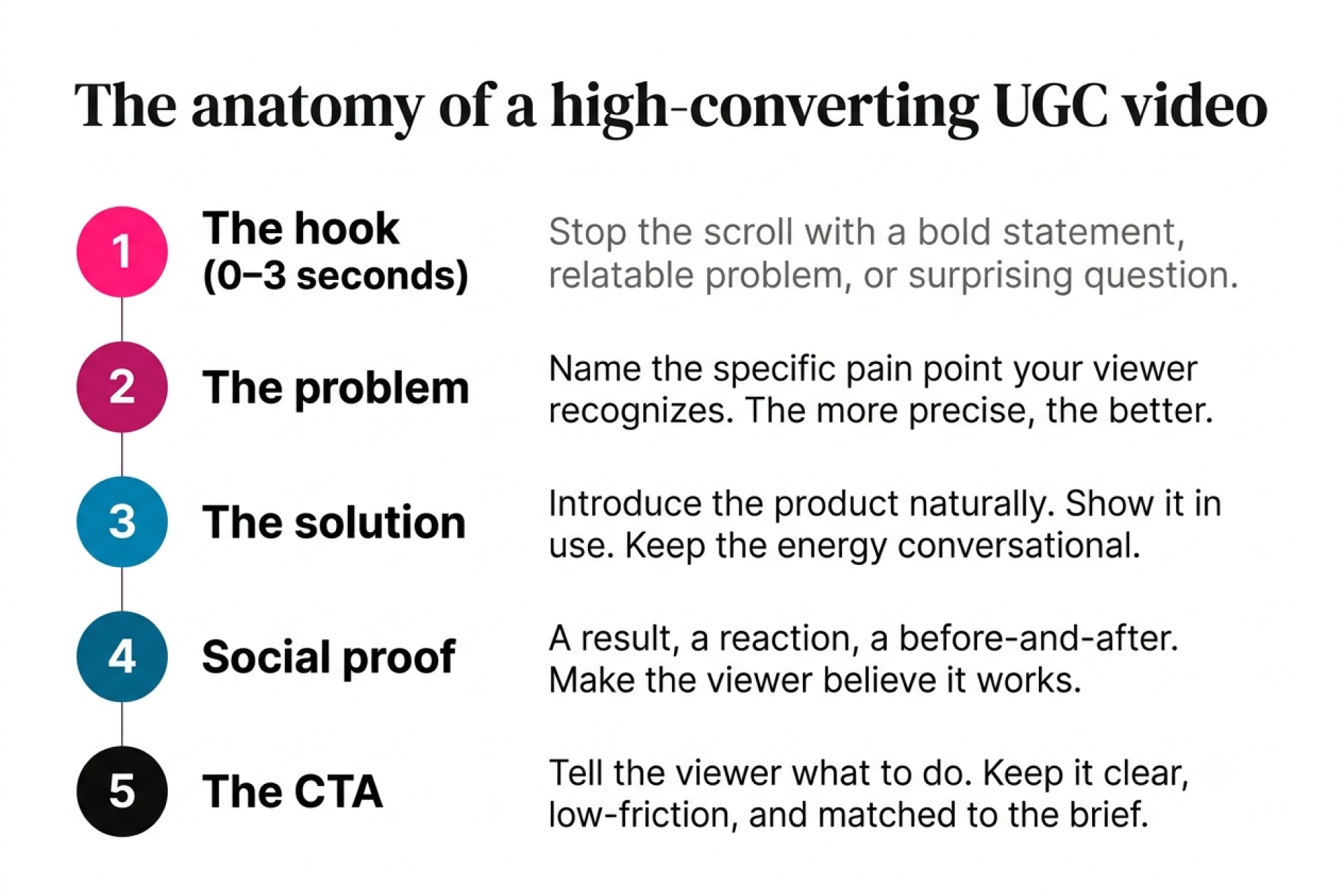
Image Source: Gemini, 2026
4. Create a media kit
A media kit is a one- to two-page document that introduces you to brands and tells them everything they need to know to decide whether you're the right fit.
A strong UGC media kit typically includes:
- A short bio
- Content samples
- Deliverable types
- Turnaround time
- Rates
- Brands you've worked with (if any; leave this out it if you're just starting out)
- Contact information
5. Reach out to brands
Many brands reach out to experienced creators for collaboration, but if you’re just starting out, you'll be doing most of the reaching out yourself.
Tips:
- Do your research to see if they feature UGC on their social media platforms. If they do, take note of their voice, style, and other preferences.
- Show that you’ve had some prior interest in the brand + brand loyalty and aren’t reaching out to them to make money. Bonus points if it’s a company you already use.
- Follow the brand’s socials. A DM on Instagram or TikTok is a good way to introduce yourself. Share a bit about who you are, what you do, one specific reason you'd be a good fit, and a link to a portfolio. Email works well, especially for larger brands where DMs get less attention.
- Make your portfolio easy to access so brands don’t have to dig for examples of work.
- Join an influencer or creator marketing agency roster, such as The Influence Agency, to increase your chances of being matched with brand campaigns. Brands often approach these agencies directly, so being on a roster can lead to inbound opportunities.
- Follow up once. A single follow-up about a week later stays professional, but anything beyond that can feel pushy.
Keep in mind: The UGC industry is fun, but it’s also admin-heavy. Most top creators spend a large portion of their time on pitching, following up, and planning content strategies, with only a small portion of their time spent filming and editing.
6. Make the project plan
If you’ve made it to step five, congrats, you are now an official UGC creator!
After you’ve sealed the deal with a brand, the work shifts from pitching to planning. Before you film anything, get the following aligned with the brand:
How much should you charge for UGC?
Charge your services based on your experience level, the deliverable type, and how the brand plans to use the content. Because brands are paying for the creative asset rather than your audience size, your rates should scale based on production complexity, deliverables, and usage rights.
Here’s an example rate sheet as a reference:
A few things worth knowing before you set your rates:
- Paid media rights should always cost more. A brand running your content as a paid ad is extracting significantly more value from it than one posting it organically once.
- Package deals benefit both sides. Brands get more content at a better rate; you get a larger guaranteed payment and a longer working relationship.
- Full buyouts are rare and should be priced at your highest rate. Once a brand owns the content outright, they can use it indefinitely and however they choose.
- Rates are negotiable, but know your floor. Decide your minimum acceptable rate before any conversation starts, so you're not making decisions under pressure.
Tip: If a brand asks for paid media rights after you've already agreed on an organic rate, that's a revision to the contract. Requote accordingly.
Learn more: Must-have terms in influencer contracts
How to use AI tools as a UGC creator
You can use AI to speed up and structure almost every part of your UGC workflow, especially the parts that usually take the most time. While AI-generated video content is improving, brands commissioning UGC are paying specifically for authentic human performance, so AI should only support the process.
Learn more: Best AI tools for content creators
FAQs
In summary
- UGC creation is still a fast-growing path in digital marketing, offering creators the chance to earn by producing authentic, high-performing content for brands without needing a large following.
- Success comes from choosing the right niche, building a strong portfolio, setting up professional profiles, and consistently pitching yourself to brands.
- While AI can speed up research, scripting, and planning, brands ultimately hire UGC creators for real human presence, product experience, and trust-driven storytelling.
- Working with influencer or creator marketing agencies can also open doors to consistent opportunities, since agencies actively connect vetted creators with brands looking for UGC talent.
- With the right strategy and consistent outreach, UGC can become a sustainable freelance career built on creativity, reliability, and strong brand relationships.
Start getting paid for your content
Ready to turn your content into a career? The Influence Agency is a leading digital marketing agency in North America that specializes in providing content creators with incredible opportunities to partner with the biggest brands in the world.
If you're serious about building a roster of paid brand partnerships, we want to hear from you. Join our UGC creator roster to start landing UGC campaigns.