How AI fragmented everything, and why coherence is the advantage.

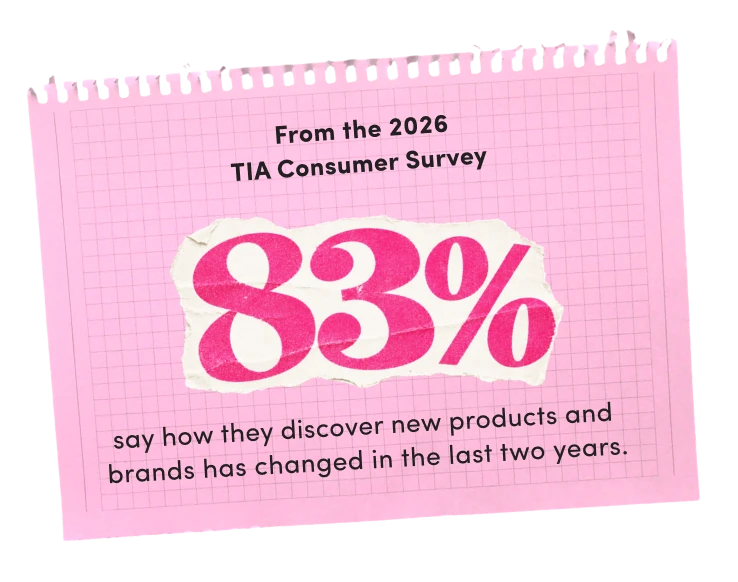
From the 2026 TIA Consumer Survey: 83% say how they discover new products and brands has changed in the last two years.
The marketing funnel didn’t die. It shattered, and your customers are taping the pieces to a million different walls.

The map no longer works

In the early 2010s, digital marketing felt simpler. There were only a few games in town that brands had to compete in and win: Google for search, display for awareness, and social media as a nice-to-have.

Then, social stopped being optional.

Then came the age of the influencer.

Automation had its moment, and now the spotlight is on AI.

The larger challenge is staying consistent and intentional across every channel.

You’ll find the answers in this year’s edition of The Yearbook.

Noah ParkerFounding Partner,
The Influence Agency

How to Read this Book

Discovery isn’t one path anymore. Our 2026 survey found five different ways people find, trust, and buy. Seven quick questions tell you which one is yours, and what it means for the brands trying to reach you.

The five behavior modes

Take the full quiz
Find your mode

7 questions · About 2 minutes

Part 1

The Great
Unraveling

From “just Google it” to “wherever the algorithm takes you.” The collapse of predictable discovery.

For twenty years, discovery had a front door. You typed a question into Google and clicked a blue link. That door is being quietly bricked over . . . and nobody sent the memo.

The front door had a name

For twenty years, discovery had a shared front door. When you wanted to find something, you Googled it. One box, one method, one habit so universal it turned into a verb. Behind that habit sat an entire infrastructure of predictability. Brands knew that if someone was looking for what they sold, there was one place that person would start, and a known set of moves to be found there.

That piece is discovery.

The Introduction to this book argued that the funnel was shattered. Part 1 is about the piece that broke first and broke hardest. Before a consumer can research you, validate you, or buy from you, they have to find you. Discovery is the foundation on which the rest of the journey stands. More to the point, discovery, as a shared and predictable thing, is gone.

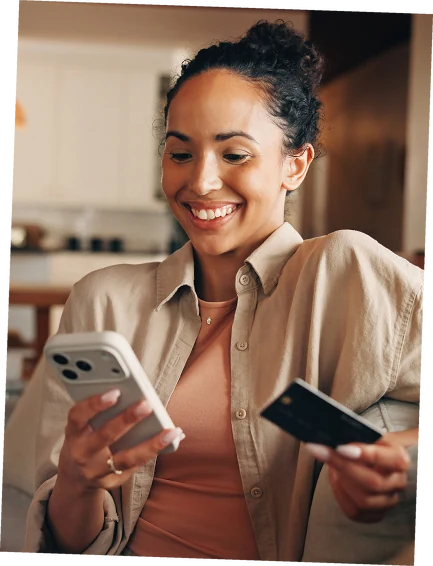
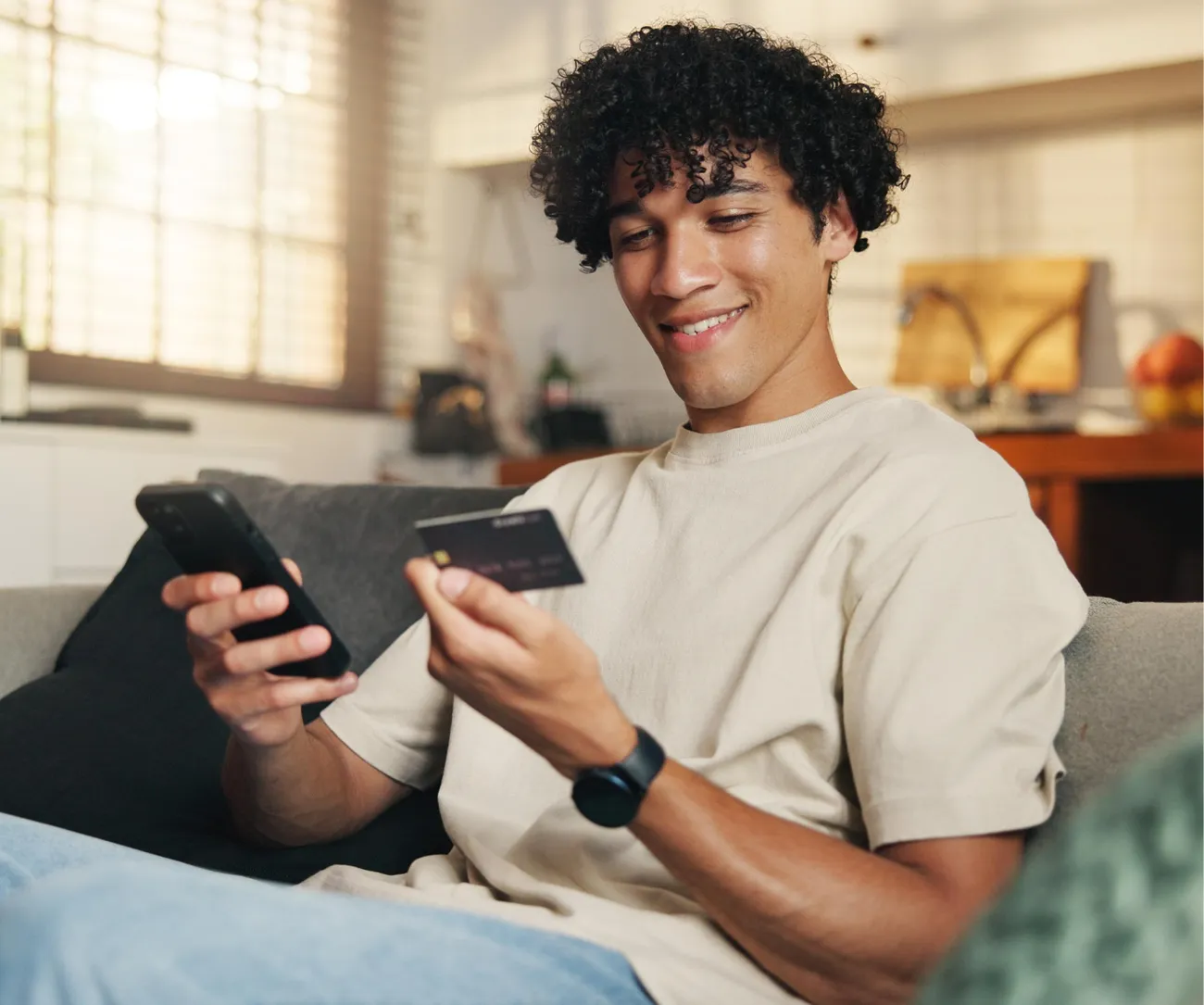
A young man on a couch smiling at his phone while holding a credit card

Search didn’t die. It scattered.

The mistake is to read this as a story about Google losing a little ground, because it’s bigger than that. Search itself has splintered into a dozen different behaviors, and none of them is dominant.

What makes this so disorienting for brands is that the same person uses these doors differently depending on mood and moment. The careful researcher weighing a major purchase behaves nothing like the same person half-watching TikTok on the couch. The channel a brand invested in last year might not be the door its customer reaches for today. You’re no longer optimizing for a path, but are trying to be present across an unpredictable set of them.

Our own numbers make the scattering concrete. In our 2026 survey of North American consumers, discovery no longer starts in one place. Instagram led at 57%, TikTok at 49%, and YouTube at 30%. Google, the supposed front door, came in at just 27%, and ChatGPT accounted for 14%. These are all in play at once, and every consumer assembles a different combination.

This isn’t a fringe shift, either. Visits to AI search tools grew roughly 43% year over year in early 2026, reaching more than 27 billion in a single quarter, according to Wix’s AI Search Lab3. The single discovery path didn’t give way to a new single path. What’s happened is that it was replaced by many, and the map is being redrawn all while we watch.

“Search didn’t die. It scattered into a dozen front doors, and every consumer now walks through a different one.”

The new first filter answers even before you arrive

The most consequential shift sits right at the start of the journey. AI answer engines, ChatGPT, Perplexity, and Google’s own AI Overviews now stand in front of the old list of blue links. They read the sources, condense them, and deliver a finished answer on the page. For a growing share of questions, the search result is the destination. There’s no next step.

Consumers are ready for this in a way many brands aren’t. In our survey, 75% said they’re comfortable or very comfortable using AI tools, and 14% already name ChatGPT as a place they start looking. The behavior isn’t waiting for permission; it’s here.

The numbers on the other side are stark. Roughly 60% of Google searches now end without a single click to any website, and in Google’s AI Mode, that figure climbs to around 93%. When an AI Overview appears above the results, organic click-through rates drop by about 61%, according to Seer Interactive4. A controlled Pew Research study5 found people clicked through nearly 47% less often when an AI summary was present.

Read those numbers again, because they describe something genuinely new. The customer asked their question, and the machine answered it. Your brand, even if it supplied the underlying information, was never seen.

Part 2

The Fragmented
Consumer

Generational marketing still matters, but in 2026, behavior is the new demographic

A 45-year-old and a 22-year-old just discovered the same brand the same way. Two 22-year-olds did it completely differently. In 2026, age tells you less than it ever has.

Last year, we sorted people by age

Last year’s playbook sorted audiences by generation, and it worked, up to a point. Boomers here, Gen Z there, a message tuned to each. For a long time, age was the single best predictor of behavior a marketer had. In 2026, it’s a fraying one. It happened faster than anyone could have predicted. This tells us how quick things are moving in the age of artificial intelligence.

Generational targeting worked because, for decades, people of the same age genuinely did share a media diet. They watched the same channels, read the same magazines, and saw the same ads at the same time. Demographics were a decent proxy for shared experience, but it’s this proxy that broke. The shared media diet is petering out, and is being replaced by billions of individually tuned feeds. A proxy for something that no longer exists stops being useful.

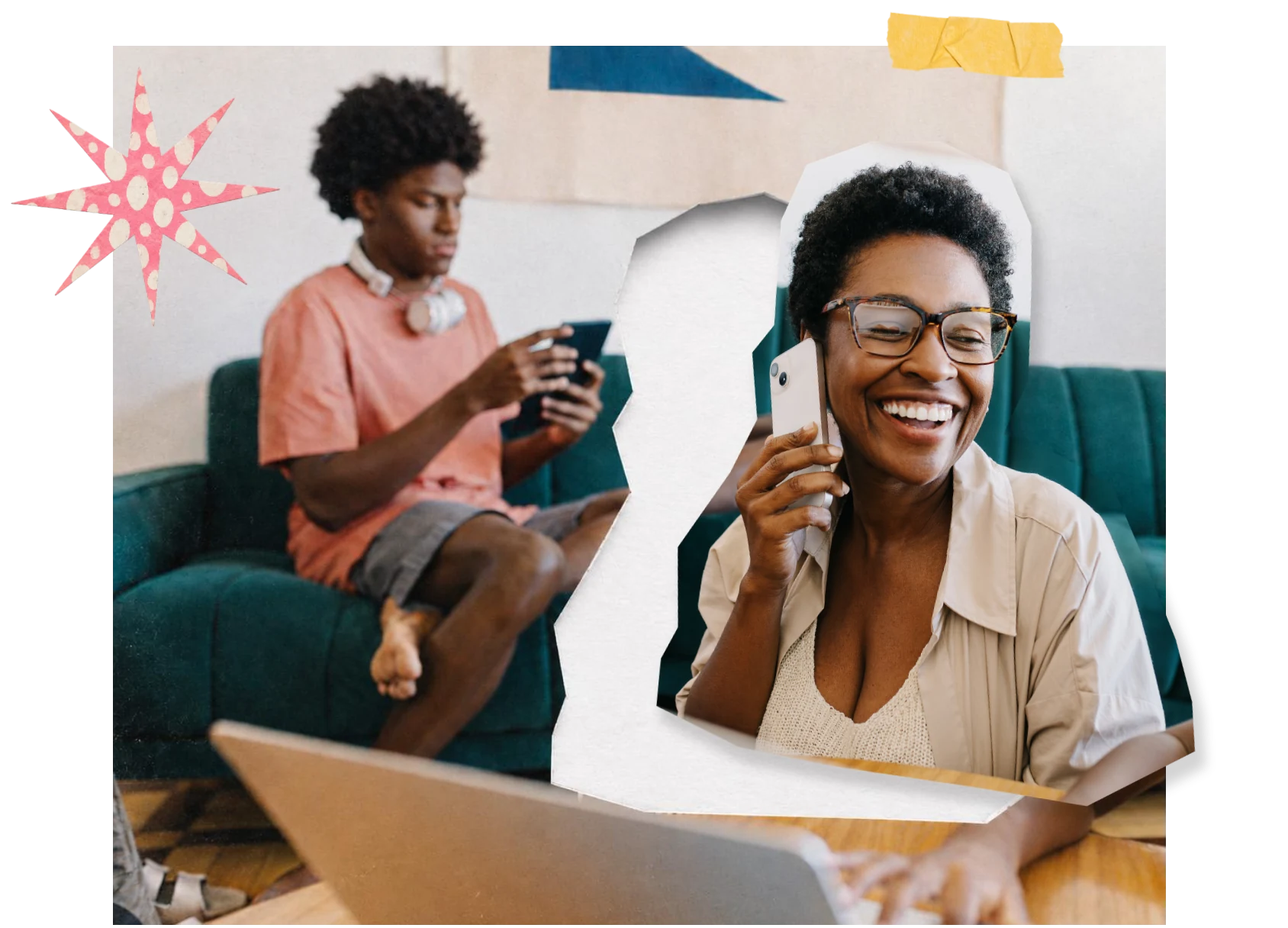
A young man scrolling his phone on a green couch, with a laughing woman on a phone call cut out and pasted over the photo

The reason is everything Part 1 described. When discovery scatters and every feed is personalized, people stop sharing inputs. In our 2026 survey of North American consumers, 87% said their version of the internet looks different from what their friends and family see. Two people the same age, in the same city, now scroll past almost entirely different worlds. If their inputs don’t match, their behavior won’t either, and a birth year can no longer tell you how they’ll act.

Behavior is the new demographic

Generational marketing still matters. Life stage shapes budgets, priorities, references, and taste, and we’re not throwing any of that out. But the thing that now truly predicts how someone discovers, evaluates, and buys is no longer the decade they were born in. It’s their behavior: the pattern of how they move from not knowing you to choosing you. A 45-year-old and a 22-year-old can run that pattern identically, and two 22-year-olds can run it in opposite directions.

This is an evolution of last year’s thinking. Generation still tells you plenty, and a campaign that ignores life stage will misfire. What changed is reliability. Age used to be the strongest single signal available. Now it’s one input among many, and rarely the sharpest. What happened, you ask? Behavior overtook it.

You can watch age come loose from behavior in almost any category. Two men in their fifties: one reads every spec sheet before buying a drill, the other taps “Buy now” on a tool a favorite creator demoed, no research at all. Two women in their twenties: one screenshots outfits for months before purchasing, the other never buys anything her group chat hasn’t blessed. Same ages, opposite behaviors. The demographic they share predicts almost nothing about how to reach them.

That pattern of behavior is what we call a mode. It isn’t a personality type, and it isn’t fixed. It’s the gear a person is in for a given decision, and it predicts far more than the demographic box they tick.

“Age still matters. It just stopped being destiny.”

Part 3

The Platform
Mosaic

Stop treating platforms like stages. Start treating them like tools your audience picks up and puts down.

The same person uses TikTok, Google, and Reddit for three different jobs in a single afternoon. The platform didn’t assign those roles; they did.

“Platforms no longer own a role. Your audience assigns them one.”

Platforms stopped being stages

Last year’s model treated platforms as stages in a neat discovery-to-conversion arc, each with a fixed job: TikTok for awareness, Google for research, the website for the sale. In 2026, that model breaks. People jump between platforms unpredictably and assign each one a role based on the mode they’re in, as opposed to the function the platform was built for. Platforms no longer own a role. Users hand them one.

So a real cross platform marketing strategy in 2026 isn’t picking a handful of platforms and pushing the same thing across all of them. It’s understanding the job each platform is doing for your audience in a given moment, and showing up to do that job well.

The mosaic, tile by tile

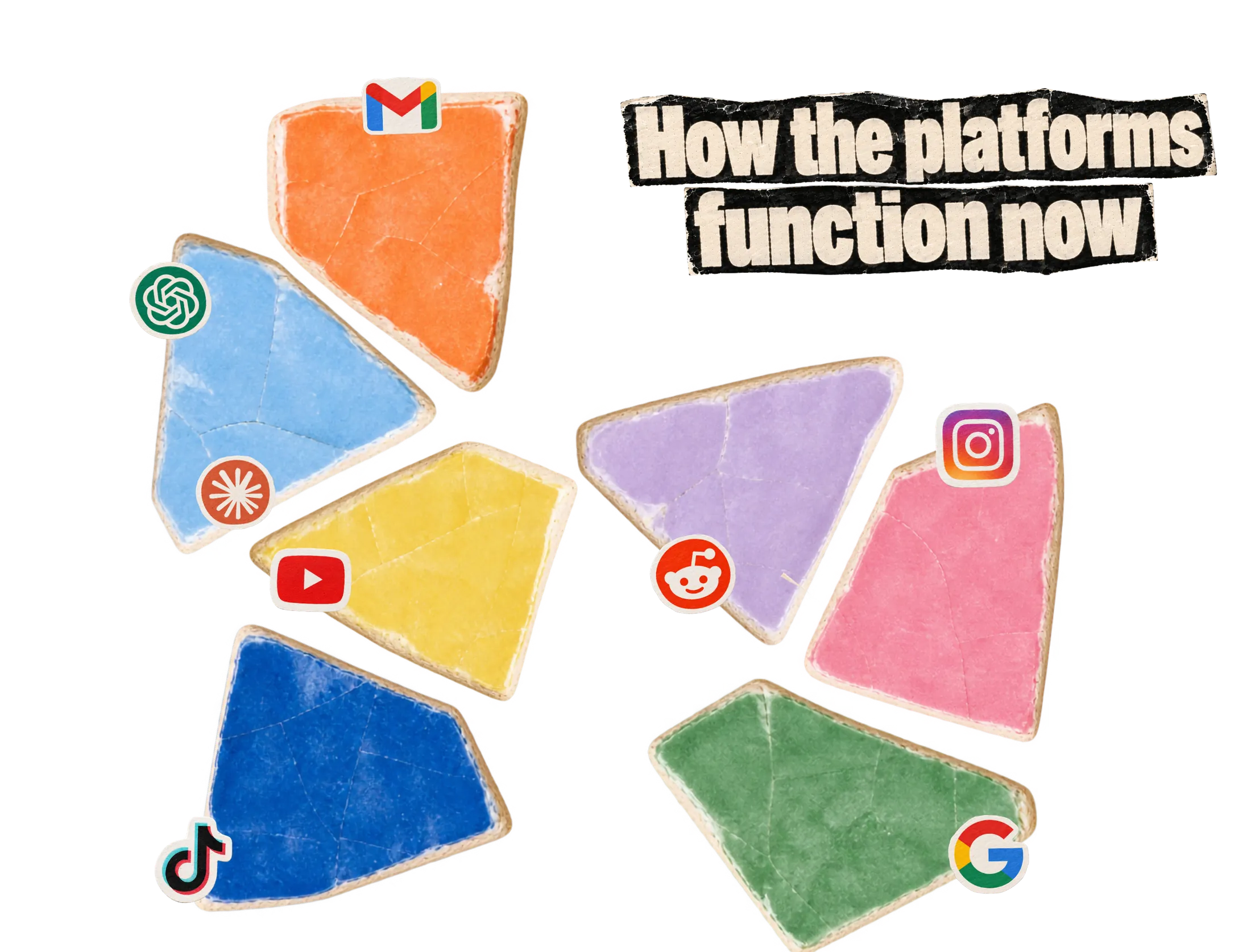
Here’s how the pieces function now, defined by how people use them rather than how the platforms describe themselves.

How the platforms function now: torn paper tiles for email, AI assistants, YouTube, TikTok, Reddit, Instagram and Google

Email and newsletters,
the loyalty layer. The
one channel you own,
and the antidote to
fragmentation for brands
willing to earn it.

AI assistants, the first
filter. Condensing and
directing research
before anyone
reaches you.

YouTube, the depth
engine. Still the
library, now doubling
as the second-opinion
validator.

TikTok, the spark. Discovery
and early research fused
into entertainment. Often
the first place a brand
is found. This is where a
TikTok marketing strategy
earns discovery.

Reddit and communities,
the raw voice. The last
unfiltered layer of peer
influence.

Instagram, the
social showroom.
Identity, aspiration,
and conversion
layered into one
surface.

Google, the credibility
layer. Less the starting
line, more the truth-
check people run before
they commit.

  • Email and newsletters, the loyalty layer. The one channel you own, and the antidote to fragmentation for brands willing to earn it.
  • AI assistants, the first filter. Condensing and directing research before anyone reaches you.
  • YouTube, the depth engine. Still the library, now doubling as the second-opinion validator.
  • TikTok, the spark. Discovery and early research fused into entertainment. Often the first place a brand is found. This is where a TikTok marketing strategy earns discovery.
  • Reddit and communities, the raw voice. The last unfiltered layer of peer influence.
  • Instagram, the social showroom. Identity, aspiration, and conversion layered into one surface.
  • Google, the credibility layer. Less the starting line, more the truth- check people run before they commit.

Same brand, different rooms

The instinct is to pick one brand voice and broadcast it everywhere. That reads as tone-deaf in 2026, because each platform is a different room with different social rules. The strongest social media platform strategy treats every platform as its own room and behaves accordingly, while keeping the one thread that makes it unmistakably your brand in all of them.

External Example: Duolingo

Signal or Noise?

Duolingo runs a different personality on every platform and it works.
Its TikTok is absurdist and creator-native; its email is earnest and
gamified; and its LinkedIn is disarmingly self-aware.

Same brand, radically different platform behavior, because each
version fits how people show up in that room.
Duolingo didn’t pick
one voice and broadcast it. It read the room it was in and behaved
accordingly.

TIA’s verdict: Signal. This is the cross-platform playbook in one
brand. The discipline isn’t being loud everywhere; it’s being fluent
in each platform’s native language while staying recognizably
yourself.
The caveat: different personalities still need one connective
thread, or difference curdles into incoherence.

Sources: widely reported 2024 to 2026 campaign coverage.

Part 4

Content in the Age
of the Collector

Your content isn’t being consumed. It’s being saved, filed, and used as evidence.

Ninety-one percent of people screenshot or save content to come back to. Your best work isn’t being watched; it’s being filed.

From consuming to collecting

Content used to be consumed linearly. You watched it, read it, scrolled past it, and it was gone. Now it’s collected: saved, revisited, screenshotted, and deployed as a proof point in someone’s own decision.

In our 2026 survey, 91% of people said they save, screenshot, or bookmark content to come back to, and 68% do it all the time. The scrapbook stopped being a design metaphor for this book; it’s the actual behavior.

What people save tells you what they value. The top reasons were information useful enough to return to, a product they were seriously considering, and an idea or aesthetic worth keeping. Usefulness, intent, and inspiration. Notice what isn’t on that list: went viral.

Volume stopped working

The dominant content trend of the last decade was volume: post more, on more channels, more often. In a fragmented, AI-saturated feed, volume is now mostly noise you paid to produce. What the content marketing trends of 2026 reward is the opposite: depth, relevance, and reusability. Content solid enough to be saved once and used many times.

No single format wins

There’s no single winning format anymore, because each one does a different job. Short-form earns discovery, long-form earns validation, email earns commitment, and creator point-of-view earns trust. A content strategy that bets everything on one format is optimizing for one moment in a journey that now has many. The broader content marketing trends all point the same way: match the format to the job, instead of the algorithm of the week.

Build the standalone artifact

Screenshot culture sets a hard requirement: your content has to work as a standalone artifact, stripped of its caption, its thread, and its context, because that’s how it travels. If a screenshot of your post still makes sense, and still points back to you, three weeks later in someone’s camera roll, you built it right. Personalized marketing gets the right artifact to the right person, but the artifact still has to survive on its own.

External Example: Wealthsimple

Signal or Noise? Wealthsimple

Wealthsimple built a content and
education layer that people treat as a
reference. Its explainers and guides pull
a large share of their traffic from non-
branded searches, people looking for an
answer, and finding it there. That saved,
returned-to, trusted-reference behavior
is exactly the Collector at work, and it
has run alongside the company crossing
well over $100 billion in assets under
administration.

TIA’s verdict: Signal. Content built to
be kept and re-used compounds in a
way campaign content never does. The
caveat: this only works if the content is
genuinely useful on its own terms. The
moment it tilts back into a disguised sales
pitch, the Collector stops saving it.

Sources: Wealthsimple company reporting
and coverage, 2025 to 2026.

Part 5

The New Architecture
of Influence

Influence was a hierarchy. Now it’s a network. Here’s how to build inside it.

People rate trust in friends and family at 4.01 out of five. Asked who they trust most, just 16 of 336 chose the brand itself. Influence didn’t die. It moved to people who aren’t you.

From funnel to network

Influence used to flow from the top down. A big name spoke, a large audience received, and the brand paid for the size of the megaphone. That’s a hierarchy. In 2026, influence forms through micro-networks of trust instead: creators acting as windows rather than megaphones, niche communities acting as validators, and peer proof outweighing public proof. The funnel became a loop.

Our survey maps it plainly:

  • People rate trust in friends and family at 4.01 out of five.
  • Micro-influencers, at 3.09, outscore paid or verified accounts at 2.72.
  • Asked who they trust most about a purchase, only 16 of 336 people chose the brand itself.

An influencer marketing strategy built on borrowing trust from the right people, rather than broadcasting your own, is simply reading that data honestly.

Creators are trust anchors

The old brief bought reach: the biggest following, the most eyeballs, the lowest cost per thousand. The influencer marketing trends that matter now buy trust: fit, credibility, and community alignment.

A creator’s real value isn’t how many people they reach. It’s how many of those people believe them.

Niche beats mass

In a fragmented landscape, a niche marketing strategy outperforms a mass one, because trust concentrates in small, specific communities. The creator economy trends point the same direction: mid-tier and micro creators with tight, engaged niches routinely convert better than celebrities with broad, shallow reach. Smaller room, stronger belief.

Part 6

The Stitchwork Framework

How to rebuild your marketing strategy for the fragmentation era

You can’t fight fragmentation by being everywhere at once. You fight it with a thread strong enough to run through all of it.

The successor to the funnel

We said your job was to give the consumer pieces worth keeping. Until now, the consumer has been doing the assembling, pinning your brand into a scrapbook you never got to design. The Stitchwork Framework is where you pick up the needle. A pin holds one piece in place, and anything pinned can fall out, get reshuffled, or land next to a competitor.

A thread holds the whole thing together, no matter who’s turning the pages.

Every part of this book named a break. This part is the repair.

The Stitchwork Framework is TIA’s marketing framework 2026, the direct successor to last year’s AI-enhanced funnel, and it starts from a hard truth: you can’t out-shout fragmentation; you can only out-connect it. A unified marketing strategy in 2026 isn’t one message pushed everywhere. It’s seven working parts, deliberately stitched together by a single thread.

Think of it as stitchwork. Separate pieces, joined on purpose, stronger as a whole than any single thread pulled on its own.

The seven layers

Each layer maps to a real strategic action, a platform consideration, and a content format. Together they cover the whole journey the earlier chapters pulled apart.

Close-up of several people side by side, each holding a phone or tablet

Get your copy of
The Yearbook 2026

56 pages, free, straight to your inbox.

No spam. Unsubscribe anytime.