


Most tourism marketing starts at the booking stage, after travelers have already chosen a destination. In the tourism industry, effective marketing genuinely engages travelers earlier, during the dream and research phases, using creator content, SEO, and AEO to influence decisions first.
Travelers dream before they book. They scroll before they search. That single shift explains why so many tourism brands and travel agencies feel like they're shouting into a crowded room and getting nothing back.
At The Influence Agency, we see the same pattern in nearly every tourism marketing plan we audit: brands showing up months too late to influence the decision at all.
Why tourism marketing isn't product marketing
Unlike a software company selling a single feature, tourism sells a decision that unfolds over weeks or months and gets made with the heart before the wallet. That cycle is why the travel and tourism industry competes globally by default.
In 2025 alone, travel and tourism generated $11.6 trillion. That’s 9.8% of the world’s economy, and every dollar of it is chasing the same finite scroll.
At that scale, a boutique hotel in Banff isn’t competing with the lodge down the road. It’s competing with every mountain town on earth for a spot in someone’s dream before that dream even has a name.
What tourism marketing truly means
Tourism marketing plays its biggest role before a traveler ever types a search. It means showing up while they’re still deciding, not after they've already chosen. That's the whole idea. The execution is knowing which stage someone's in and matching the message to it, instead of running the same ad at everyone and hoping.
For tour operators, hotels, cruise lines, and destinations, that means treating marketing efforts as a full journey rather than a single push toward conversion: matching content and timing to where a traveler actually is, dreaming, comparing, or booking.
It holds whether the business runs adventure tourism, cultural tourism, medical tourism, or something more niche like religious tourism.
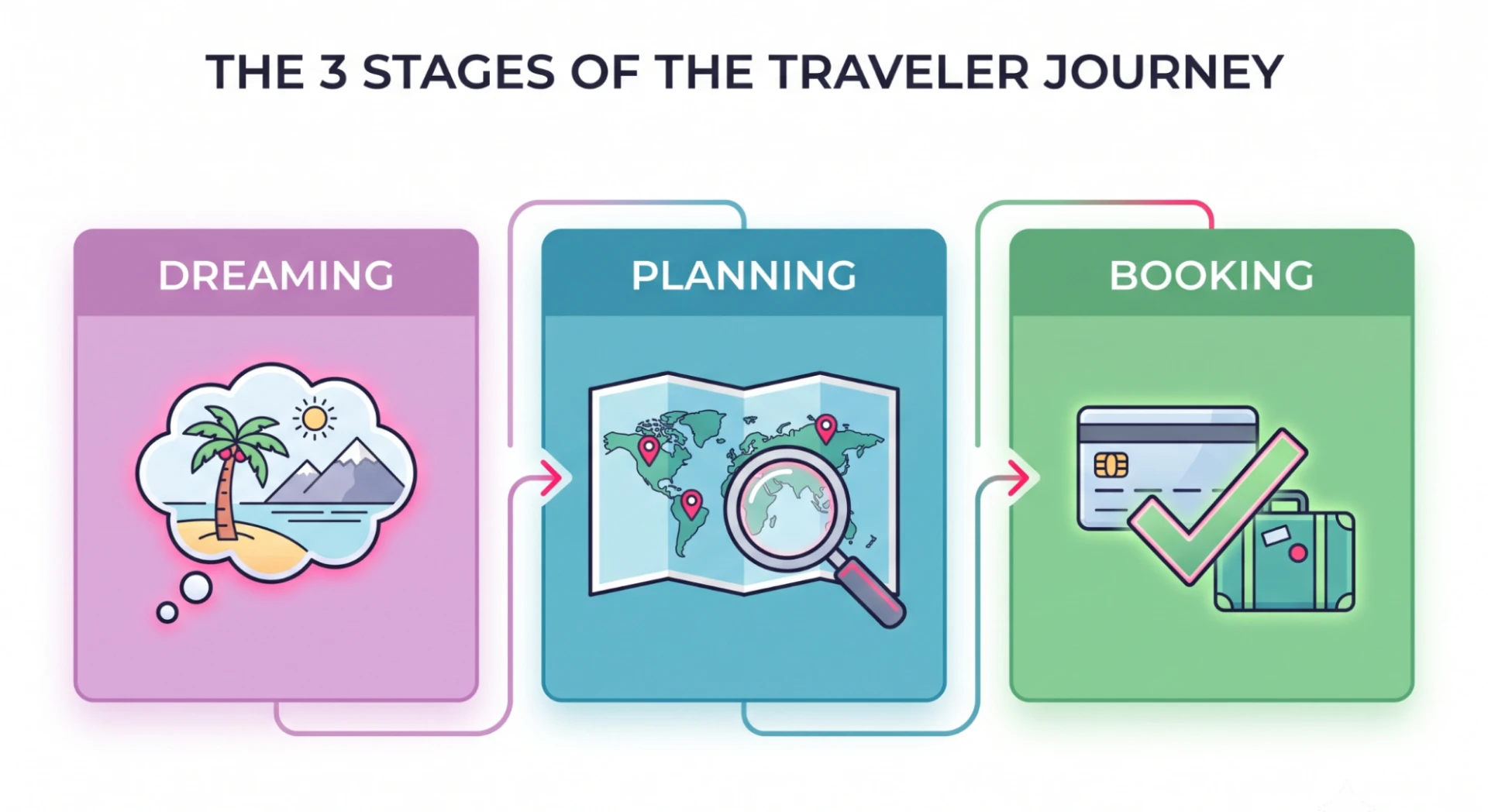
Image Source: Gemini 2026
The three-stage traveler journey
Every travel decision moves through three stages: dreaming, planning, and booking. Most tourism brands only show up for the last one, and by then the choice is already made and the chance to influence is lost.
- Dreaming: pure inspiration, often starting months before a trip becomes real.
- Planning: heavy research, where travelers compare options and read reviews.
- Booking: the action-oriented step where the traveler confirms and pays.
Each stage rewards a different channel, and treating them the same is exactly how brands end up invisible until the moment someone's already decided. Here's what actually works at each one.
Matching channels to each stage
Discovery lives in creator content and social. Real people showing real experiences spark the dream before a search bar ever enters the picture. Social video is the entry point now, not a nice-to-have.
Research thrives within search engine optimization (SEO) and answer engine optimization (AEO). This is where travelers compare options, read reviews, and ask specific questions: what a destination is actually like or whether a booking site is trustworthy.
Brands or tourism companies that answer clearly get rewarded by search engines and by AI tools. Most of this research happens on a phone, so if your site is slow, you’ve already lost that traveler.
Conversion lives in the site experience and booking flow. A stunning destination story means nothing if checkout is confusing. Remove the friction and interest becomes a booking. Leave it in, and a competitor's smoother checkout wins the traveler you already earned.
Loyalty lives in email, where repeat direct bookings are won long after the first trip ends. The trip doesn't end at booking, and neither should the relationship, especially for a travel agency business built on repeat clients.
Measurement that actually means something
Booking conversions and high-intent traffic tell you whether your marketing efforts resulted in a single booking. Tracking how many of those visits convert tells you which channel is actually earning revenue and which one is just generating traffic or gaining impressions that go nowhere.
Another question worth asking is which touchpoint earned that booking: a creator's video for discovery, blog content for research, or a retargeting ad for conversion? Tracking the full journey tells you which channels worked and which didn’t.
For tourism businesses running on tight margins, that's the difference between a budget that grows and one that quietly bleeds out.
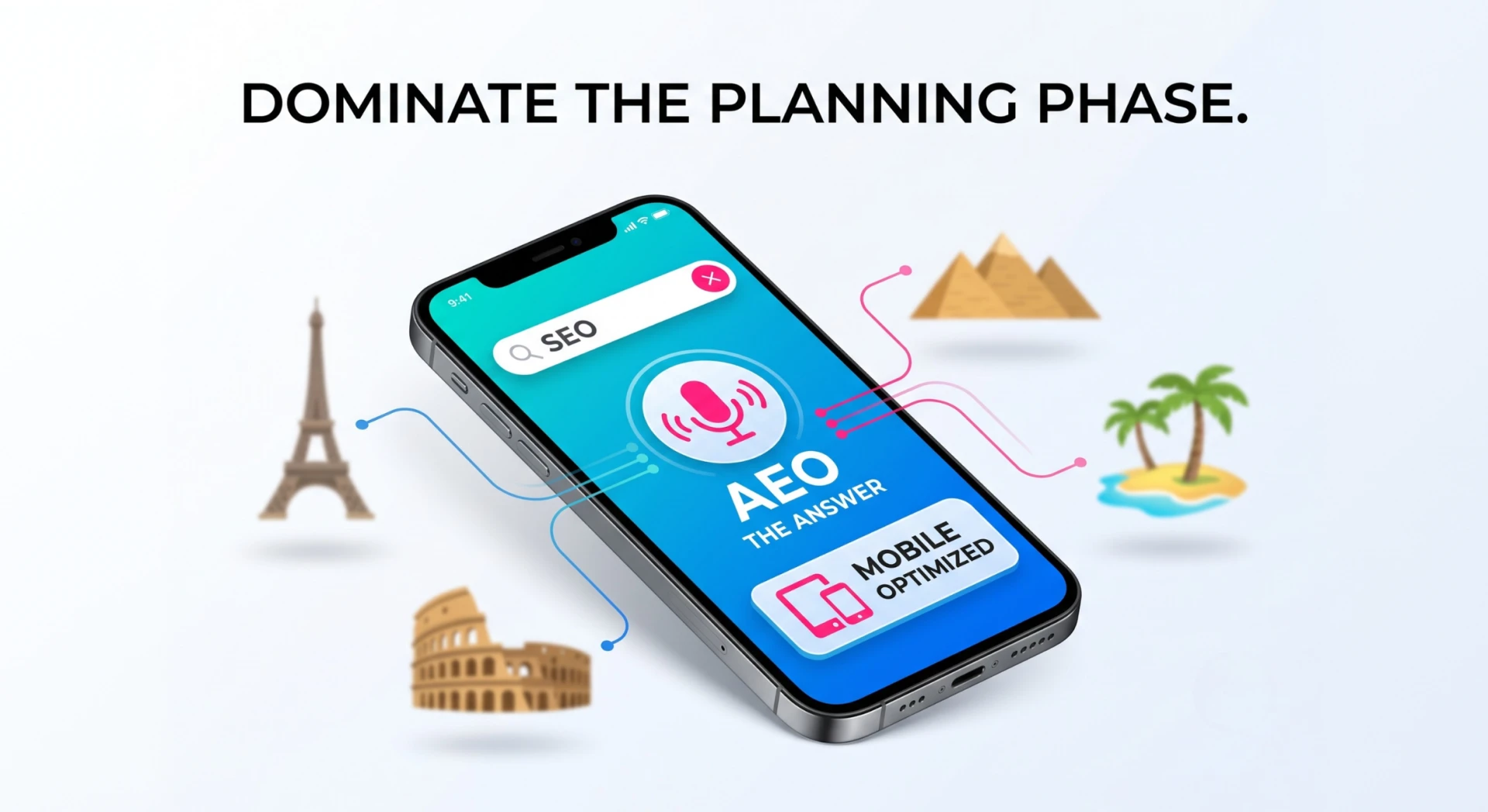
Image Source: Gemini 2026
Where to start if you're building from nothing
Start by mapping your own funnel. Where does your marketing actually show up: dreaming, planning, or booking? For most players in the travel industry, the honest answer is "only at the bottom, and usually too late."
Fixing that starts with discovery content promoting tourism and ends with a booking flow that doesn't lose people at the finish line. Everything in between is the work.
As a tourism marketing agency, The Influence Agency's travel and tourism service is built around this very framework, from the first scroll that sparks curiosity to the checkout that turns it into a confirmed trip.
FAQs about tourism marketing
Key takeaways
Ready to meet travelers earlier?
You already know where your funnel breaks: dreaming, planning, or booking. The next move is fixing whichever stage is bleeding the most bookings, not guessing at all three at once.
Talk to our travel and tourism team about where to start.