


Baby Boomers represent one of the wealthiest and most brand-loyal consumer segments alive today. Marketing to this generation means rethinking assumptions, meeting them where they actually are, and delivering the clarity and value they demand.
There's a persistent myth in digital marketing that Baby Boomers don't belong in the conversation. Too old for TikTok. Too set in their ways to switch brands. Too offline to matter.
None of that holds up to scrutiny.
Born between 1946 and 1964, Baby Boomers control a massive share of consumer spending in North America. They're active on social media, comfortable shopping online, and more brand-conscious than almost any other generation. Marketers who write them off are leaving serious money on the table.
This is the final installment in our generational marketing series. We've already covered how to market to Generation X, Gen Z, and the Millennials. Baby Boomers round out the picture, and in many ways, they're the generation that demands the most intentional approach.
For a full breakdown of how to build marketing strategies across every generation in 2026, explore our Yearbook, where we cover marketing to Baby Boomers down to Alpha.
Who are Baby Boomers?
The Baby Boomer generation grew up during a period of postwar prosperity, social upheaval, and rapid change. They came of age alongside the civil rights movement, the moon landing, and the rise of television as a mass medium.
These shared life experiences shaped a group defined by a strong work ethic and a preference for earned trust over flashy promises.
Today, most Boomers are between 62 and 80 years old. Many are retired or approaching retirement, which means they have both time and substantial disposable income. According to AARP, adults over 50 account for more than half of all consumer spending in the United States.
What values drive Boomers’ purchasing decisions?
Baby Boomers tend to prioritize quality over price. They've spent decades building preferences and loyalties, and they don't abandon them easily. When a brand earns their trust, it keeps it.
This age group also responds strongly to messaging that respects their experience and autonomy. Condescending language, oversimplified visuals, or the assumption that older consumers need hand-holding will backfire quickly.
Boomers are discerning, informed consumers who research before committing. Presenting ideas that feel patronizing is one of the fastest ways to lose the sale.
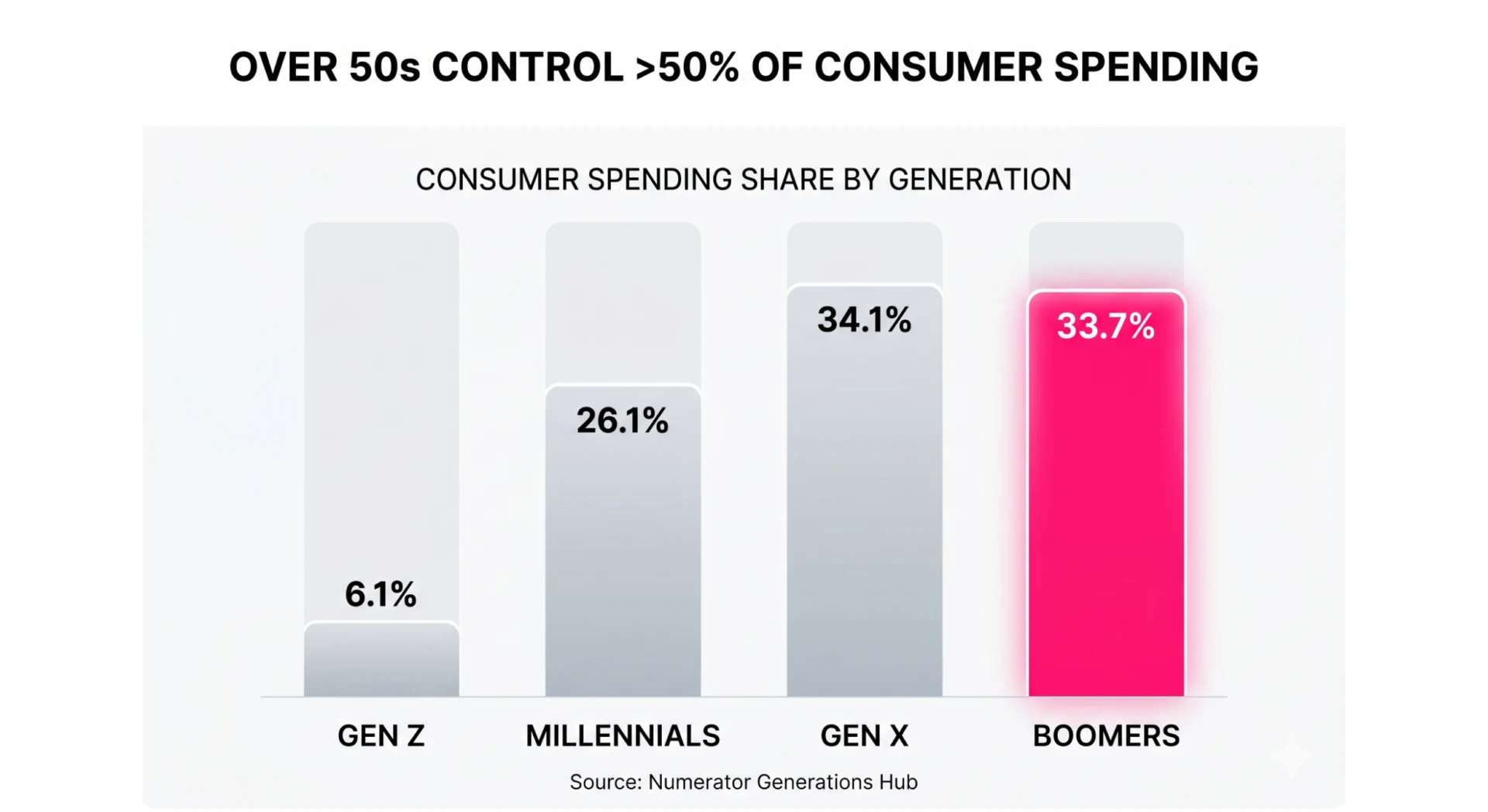
Image Source: Gemini 2026
Where Baby Boomers actually spend their time online
One of the most damaging misconceptions about reaching Baby Boomers is the assumption that they're largely offline. The data says otherwise.
Facebook remains the dominant platform for this generation, with Boomer usage rates far outpacing other age groups. Many Boomers also use YouTube regularly, both for entertainment and as a research tool when evaluating purchases.
Unlike younger generations who gravitate toward short-form video, Boomers are comfortable with longer video content that goes deep on a subject. They want detail, not just a 15-second hook.
Email continues to be a high-performing channel with this generation as well. Boomers cite it as one of their preferred forms of communication from brands they already trust. As a 2025 Sinch Survey revealed, 80% of Boomers prefer receiving promotions over email.
Search engines and the research habit
Baby Boomers are prolific researchers. They use search engines extensively before making purchasing decisions, reading reviews, comparing services, and visiting multiple websites before reaching out to a business. If your company isn't showing up when they search, someone else is capturing that demand.
This research habit has real implications for your SEO and content marketing strategies. A well-structured blog post that clearly answers a question Boomers are actively searching for creates a direct line between their intent and your brand.
Traditional media still plays a role
Unlike younger consumers who have mostly moved on, many Boomers still use traditional media. Newspapers, magazines, and TV ads still work well for this group. This is extra true for big-buy categories like healthcare, financial services, travel, and home improvement.
An integrated strategy connects digital and traditional channels and will almost always beat a digital-only campaign. This is especially true when your audience includes a large Boomer segment.
The goal is to be present wherever this generation is paying attention.
How to build marketing strategies for Baby Boomers
Lead with value, not flash
Boomers are essentially immune to hype. Flashy, creative, but without substance, won't move them. What moves them is a clear articulation of value: what does this product or service do, why is it better, and why should they trust the company behind it?
Long-form content, detailed product descriptions, and authentic customer testimonials all perform well with this group. If your brand can demonstrate expertise and back it up with social proof, you're already ahead of most of the competition.
Use influencer marketing strategically
Influencer marketing might seem like it's built for younger generations, but it works across age groups when executed thoughtfully. For Boomers, the most effective influencers tend to be peers, meaning people in their own demographic who speak authentically about products and services they actually use.
This is where working with a full-service agency that has access to a deep influencer network makes a real difference. Matching a Boomer-focused brand with the right content creator requires nuance that goes well beyond follower counts.
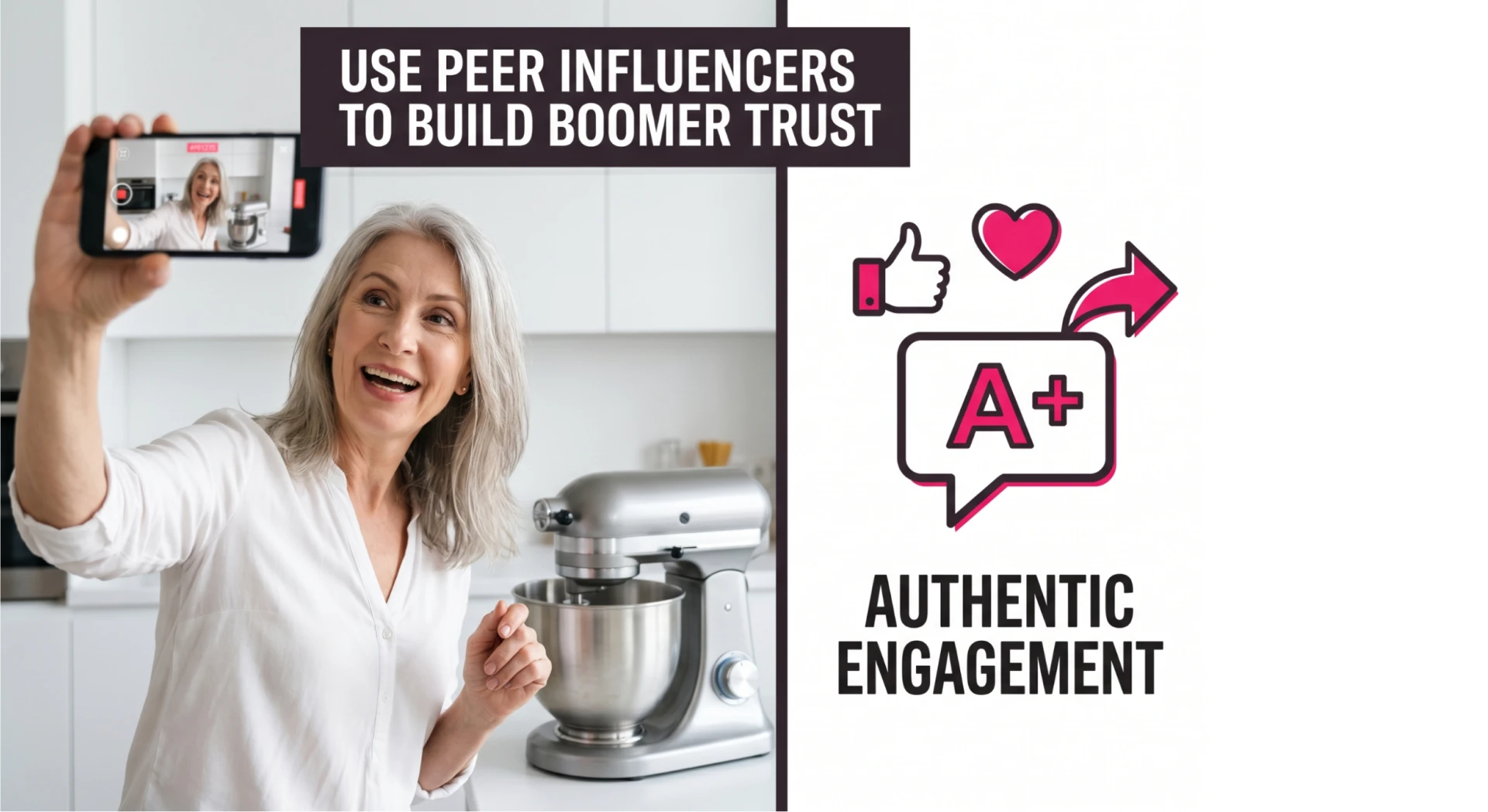
Image Source: Gemini 2026
Prioritize accessibility and usability
This is practical, not patronizing. Make sure your website loads fast and uses easy-to-read font sizes. Keep the experience smooth and simple. If Boomers hit obstacles, they won’t troubleshoot. They’ll leave and find a business that makes it easier.
Mobile optimization matters more than many marketers think. Boomers are using smartphones more often, and if your mobile experience is weak, you’ll lose conversions. Even great messaging can’t save it.
Email campaigns should be clean and scannable. Clear headlines, concise copy, and a single prominent call to action will outperform cluttered designs with this audience every time.
Channels and tactics that convert Boomer audiences
Knowing where Baby Boomers are is one thing. Knowing how to activate them is another.
Facebook advertising remains one of the most cost-effective ways to reach this generation. The platform's targeting capabilities let you reach Boomers by age, location, income, and interests, giving you precision that broad-reach channels can't match.
Facebook ads work especially well for local businesses and services with a clear, benefit-led message.
Email marketing continues to deliver strong ROI with Boomer audiences. Welcome sequences, loyalty programs, and educational newsletters all perform well.
Boomers appreciate communications that inform rather than hard-sell, so nurture-focused campaigns tend to outperform aggressive promotional pushes.
Search and content marketing are essential for this group. Given how heavily Baby Boomers rely on search engines during their research process, investing in SEO and well-crafted blog content can significantly increase your reach over time.
Video content on YouTube is also worth investing in, especially for brands in categories where Boomers spend heavily, such as travel, health and wellness, healthcare, financial planning, and home services.
Don't overlook loyalty and retention
Acquiring a Boomer customer is valuable. Keeping one is even more so.
This generation rewards brands and companies that show up consistently and treat them with respect. Brands that invest in retention, not just acquisition, will find Boomer consumers to be among their most reliable long-term segments.
And because Boomers are vocal recommenders, one satisfied customer in this age group can generate meaningful word of mouth that younger consumers simply don't replicate at the same scale.
Marketing to Boomers: A summary
FAQs about marketing to Baby Boomers
Key takeaways
Ready to reach every generation?
Marketing to Baby Boomers rewards patience, clarity, and genuine respect for your audience. The Boomers have the spending power, the brand loyalty, and the lifetime value to justify serious strategic investment.
If you're building a multi-generational marketing strategy and want expert help executing it, The Influence Agency has the network, experience, and full-service depth to drive results across every demographic.
Whether you need a revamped SEO campaign or a website makeover, our 360° digital marketing services have you covered. Let’s build the strategy to reach your target audience. Reach out to our team to get started today.