


To rank in ChatGPT and Perplexity, you need consistent third-party mentions, structured content that delivers direct answers, and a brand authority footprint that AI search engines can find, verify, and cite across multiple credible sources.
Something has shifted in how people find brands, and it happened faster than most marketers expected.
Consumers no longer default exclusively to Google when researching a product, finding a service provider, or exploring their options in a category. A growing number are turning to AI search engines, typing in a question, and reading a synthesized answer.
No list of blue links. No scrolling through ads. Just a response that either includes or excludes your brand. If it does not include your brand, you’re invisible to that searcher, and that share of AI search is growing every month.
This isn’t a future-state problem. It’s one that’s happening right now. Research shows that 80% of B2B buyers trust AI tools at least some of the time. Brands that understand how AI recommendations work today have a real competitive advantage. Those who wait for the channel to mature before paying attention are already falling behind.
Here’s what’s happening, and how to rank in ChatGPT, Perplexity, and other AI systems.
How ChatGPT and Perplexity decide what to recommend
Neither ChatGPT nor Perplexity operates like a traditional search engine. Instead of ranking pages, they synthesize information from a wide range of sources and generate a response they believe to be accurate and helpful.
That distinction matters enormously for how you build AI search visibility.
Training data and cited sources
ChatGPT is built on large language models trained on a massive corpus of internet text. When it generates a response about a category or product, it draws on patterns from that training data. If your brand has been mentioned frequently, accurately, and in authoritative contexts across the web, that signal is baked into the model's knowledge.
Perplexity operates with a distinct methodology. It executes live web searches and synthesizes information in real time, focusing on sources it identifies as both credible and pertinent.
Consequently, authoritative third-party mentions, well-structured web pages, and recent coverage are the primary factors that dictate Perplexity's current recommendations.
Brand authority signals
Both tools weigh authority. A mention in a trade publication carries more weight than a mention in a low-traffic blog.
Consistent brand mentions across multiple credible sources, a clear and accurate presence on review sites, and structured information that answers common questions all signal to AI systems that your brand is a legitimate, well-established player in your category.
Inconsistency works against you. If your brand name, description, and core messaging appear differently across your website, your social platforms, your press coverage, and third-party directories, AI systems have a harder time building a coherent picture of who you are and what you do.
In short, AI visibility requires consistent, credible brand information across every digital touchpoint.
Why traditional SEO alone is no longer enough
Traditional SEO strategies are built around ranking pages for specific search queries, where users click links. They’re still important and continue to drive meaningful organic traffic. However, traditional SEO wasn’t designed for a world in which an AI tool can read across dozens of sources and generate a single synthesized answer.
For instance, a page optimized to rank for "best influencer marketing agency" on Google will not inherently appear in a ChatGPT response for that same query. AI search visibility operates differently from traditional organic rankings, so the two systems prioritize and reward different signals.
If you want to improve brand visibility in AI search, you need a strategy that goes beyond keywords and on-page optimization. Think about your brand's digital footprint as a body of evidence that AI systems can find, read, and trust.
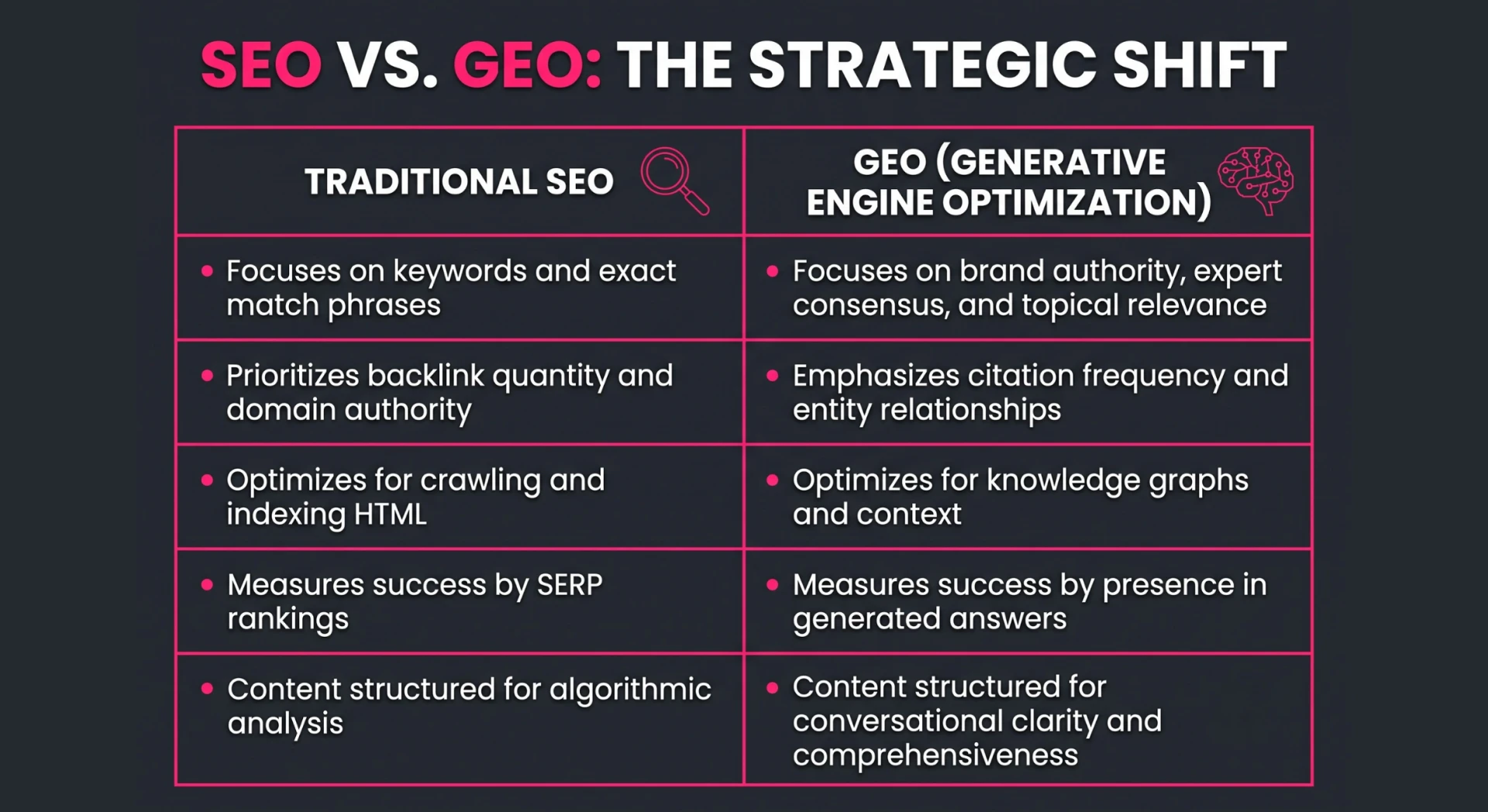
Image Source: Gemini 2026
The role of third-party mentions, digital PR, and press coverage
Want to know how to rank in ChatGPT? The answer starts outside your own site.
What others say about you heavily influences AI engine recommendations. A diverse body of evidence, including third-party mentions, analyst citations, press coverage, and appearances in reputable digital PR placements or industry round-ups, all signal to AI engines that a brand is worthy of citation.
In fact, brand mentions correlate with AI visibility at 0.664, making third-party validation one of the most direct levers you can pull.
Earning the right coverage
Strategic AI search visibility transcends vanity PR. When an industry publication features your brand and clearly defines your services and target audience, it provides direct utility to AI systems attempting to synthesize your category.
Quotes in relevant trade articles, listings within reputable directories, and case studies from credible third parties further strengthen these authoritative signals.
AI tools prioritize sources they already deem trustworthy, such as established industry journals, high-authority blogs, and popular review platforms. These sources consistently provide the structured, well-supported content that AI systems rely on to verify information.
Consistency across the web
Every time your brand appears online with inconsistent information, you create noise that AI systems must filter out. Audit your brand presence across directories, review sites, social platforms, and third-party listings, including your Google Business Profile. Your name, category, core value proposition, and key descriptors should be consistent across all channels.
This brand hygiene work may not feel glamorous, but it directly affects whether AI tools can synthesize an accurate picture of who you are and confidently include your brand in AI-generated answers.
Structured data, entity authority, and why they matter for AI search
One of the most underleveraged tools for AI search visibility is structured data. When you add schema markup to your web pages, you give AI crawlers a clear, machine-readable signal about what your brand is, what it does, and how it relates to other entities on the web.
For AI systems, this clarity is valuable. Rather than inferring what your brand does from surrounding text, the system can read a structured signal directly. This supports entity authority: the degree to which AI systems understand your brand as a distinct, credible entity in your category.
Building entity authority means going beyond your own site. It means earning consistent mentions across sources that AI engines already trust, contributing genuine expertise through thought-leadership content, building topical authority in your niche, and ensuring your brand appears in the same conversations as the category terms your customers are searching for.
“Person schema, organization schema, and FAQ schema all contribute to how clearly AI systems understand your brand,” says Associate Director, SEO at The Influence Agency.
This is where generative engine optimization (GEO) diverges most sharply from traditional SEO. SEO optimizes for how search engines rank your pages. GEO focuses on making your brand citation-ready for AI systems. Both matter, but they require different thinking.
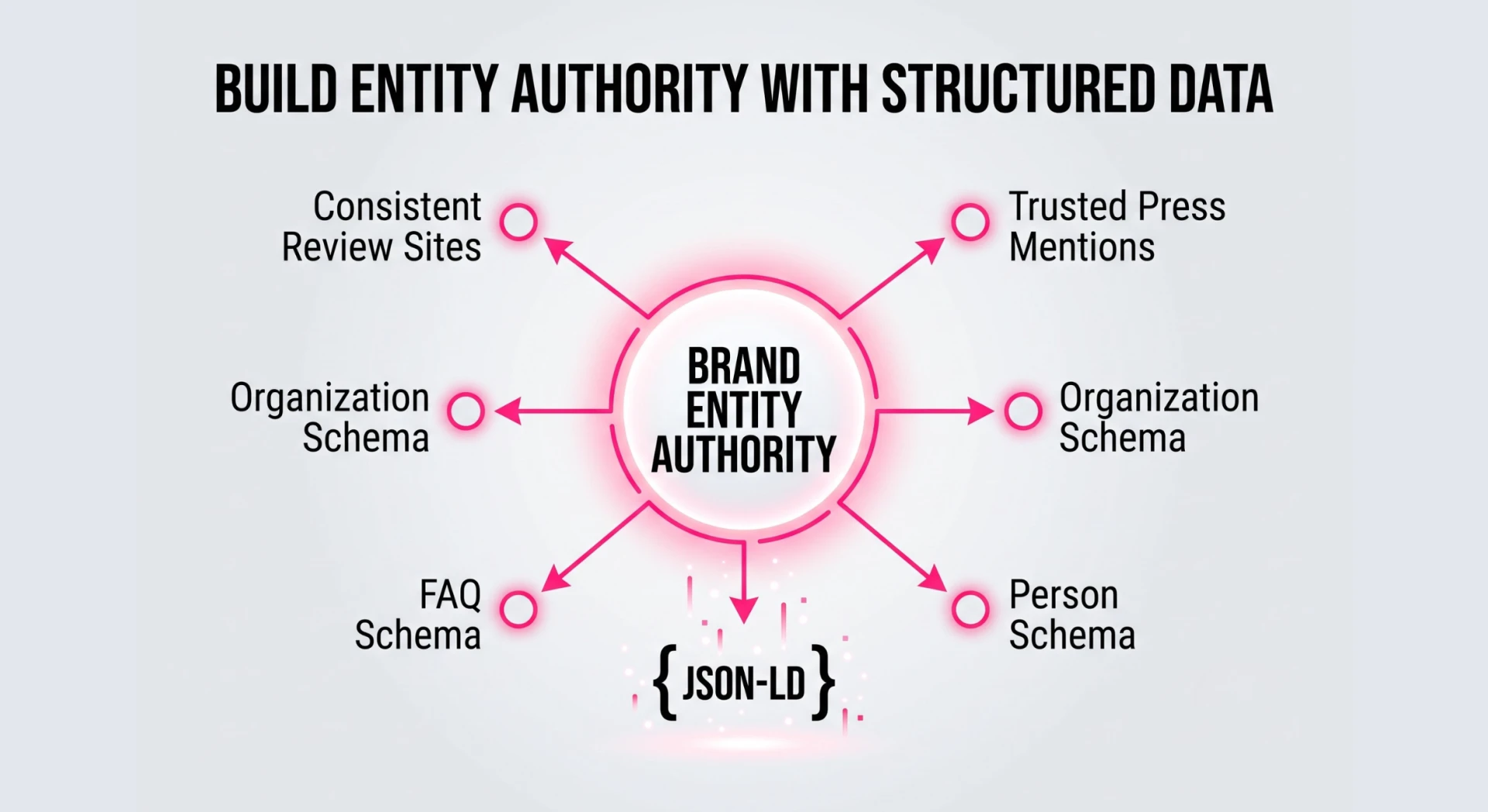
Image Source: Gemini 2026
How content structure drives AI answers
AI tools favor content that directly answers questions. This is the core principle behind answer engine optimization, and it applies just as clearly to AI recommendations as it does to featured snippets and Google AI Overviews.
Tips for structuring copy:
- Write in short paragraphs.
- Use headings that reflect the questions your audience is asking.
- Lead with the direct answer, then provide the supporting context.
- Fun fact: in journalism-speak, we refer to this as “don’t bury the lede.” Same here. Don’t bury your answer.
- Avoid burying key information in long blocks of text that require an AI system to work to extract the point.
- Avoid generic content that hedges, qualifies, and says nothing specific. AI systems need direct-answer content to quote, and consistently prioritize quality content over keyword-heavy filler.
The brands showing up in AI search results are often not the biggest. They’re the brands whose content is the clearest, most direct, and most frequently cited across trustworthy sources.
How to build your AI visibility footprint
Build your AI visibility footprint by auditing content for clarity, adding structured data, keeping brand information consistent everywhere it appears, and earning third-party mentions AI tools already trust. No single tactic does the job alone.
Here’s where to focus:
- Audit your existing content for clarity and structure. If your service pages and blog posts don’t directly answer the questions your audience is searching for, rewrite them.
- Implement structured data on key pages to help AI systems understand your brand as a clear, credible entity.
- Build a consistent brand presence across directories, review sites, social platforms, and your Google Business Profile. Every inconsistency is a signal problem.
- Earn third-party mentions through digital PR, thought leadership contributions, and appearing in industry publications and category guides.
- Create content that answers specific questions in your category. Think about what your customers are asking AI tools right now and whether your content would surface as a credible answer.
- Monitor what AI tools say about your brand and competitors. Ask ChatGPT and Perplexity about your category regularly. The gap between what they say and what you want them to say is your content strategy roadmap.
For more on how AI-powered search is reshaping discoverability, our post on how to get your brand featured in Google's AI Overviews covers the parallel shift happening in Google's ecosystem, including how Google AI Overviews and AI Mode are changing where brands need to show up.
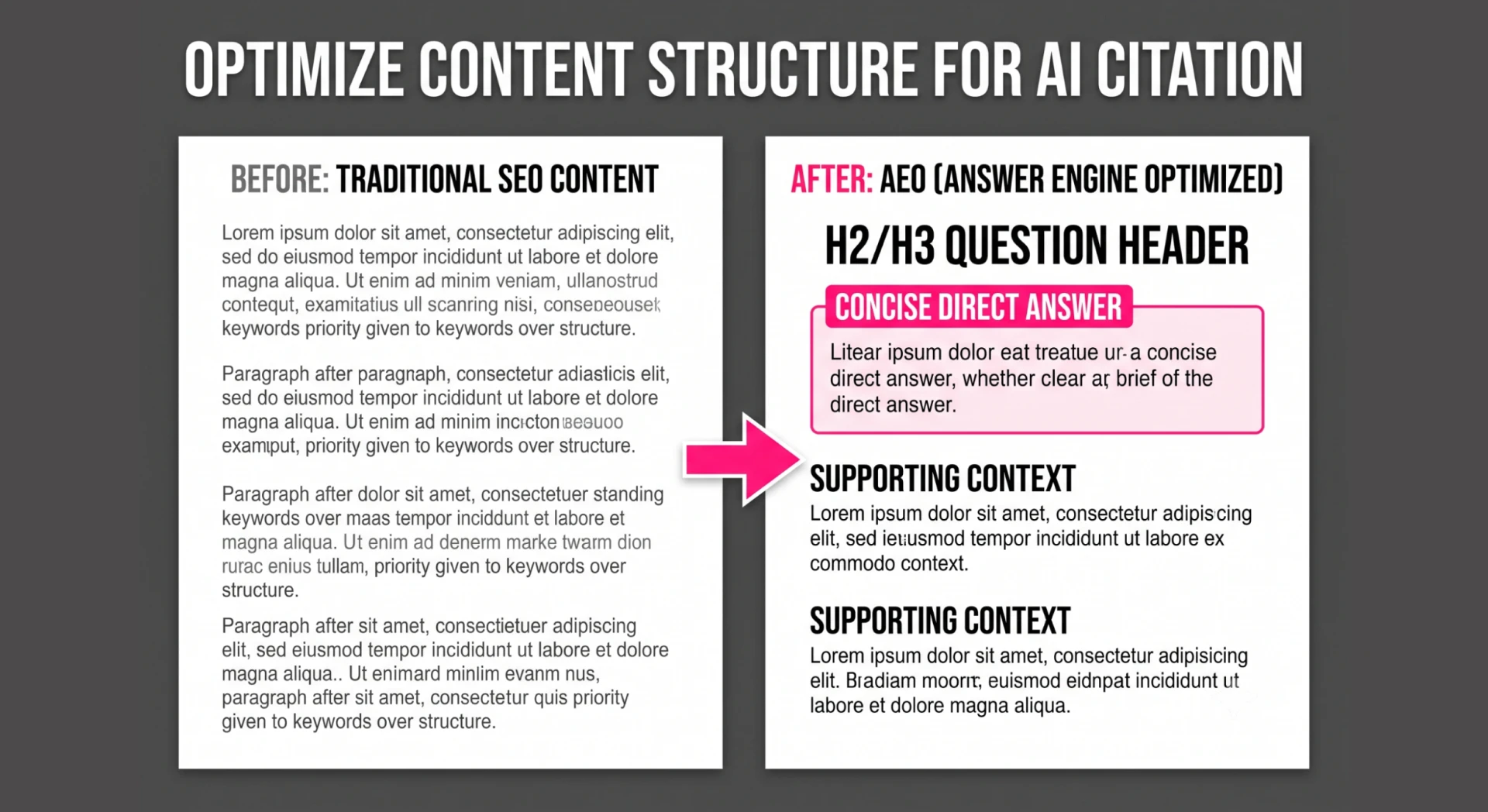
Image Source: Gemini 2026
FAQs about AI search engines
Key takeaways
Your brand should be the answer AI tools reach for
Search behavior is fragmenting, and discovery is happening in places that weren’t part of your marketing strategy two years ago. The brands winning in this environment are building authority and content infrastructure now, not waiting to see how it all shakes out.
At The Influence Agency, our generative engine optimization services are built to help brands rank in ChatGPT, Perplexity, and other AI search engines through strategic content, earned coverage, and brand authority development across both traditional and AI-powered channels.
Are you showing up when your customers ask AI tools about your category? If you’re unsure, that’s exactly where the conversation should start.