



Most ecommerce teams obsess over the message. The offer gets picked apart line by line. The creative gets tweaked until nobody on the team can look at it fresh anymore. Landing pages, targeting, product angles: all of it gets reviewed to death before a single ad goes live.
Timing, somehow, gets treated like the easy part. Pick a date. Build the schedule. Hit send.
That’s usually where things start to go sideways.
Timing shapes how relevant a campaign feels, how fast people respond to it, and whether the offer even matches what shoppers need right then. A brand can have the best creative in the world and a genuinely smart media plan, and none of it will land if the campaign shows up too early, too late, or with zero context. Bad timing has a way of making good work disappear.
For ecommerce brands specifically, better timing comes down to reading customer behavior, demand signals, channel speed, and the messier real-world forces that shape when people actually buy. The brands that get this right aren’t guessing when to show up. They’re watching closely enough to know when customers are ready to care, then showing up right then, not whenever the calendar happens to say so.
Key takeaways
- Campaign timing shapes whether an offer feels relevant, not just when it goes out.
- Seasonal calendars are a starting point, not the whole plan. Real buying behavior moves earlier and later than the calendar suggests.
- Internal metrics show what happened, not why it happened. Outside signals like weather and local demand help fill that gap.
- Every channel moves at a different speed. Judging all of them on the same short window punishes the slower ones unfairly.
Treating timing like a calendar checkbox
A campaign calendar is genuinely useful. It gives teams structure, and it makes planning around Black Friday, back-to-school, Valentine’s Day, and the holiday rush far less chaotic. The trouble is, it also tricks people into thinking timing is more predictable than it really is. Customers don’t buy just because a retail calendar says it’s go time. They buy when they’re ready, calendar or not.
Good timing means paying attention to how people shop before, during, and after those big peaks, not just on the peak day itself. The offer itself might be perfect. But if shoppers already compared prices somewhere else, found a better deal, or just moved on, the campaign is playing catch-up before it even launches.
One of our own retail clients ran into this directly. SoftMoc, a footwear retailer, moved past a single seasonal push and built an always-on content mix instead: user-generated content, meme-led creative, and a 12-video spring series timed to when people actually search for shoe care and styling tips, rather than one seasonal moment. The TikTok side alone pulled in 82.4 million impressions. That’s the gap between planning around a date on the calendar and planning around actual behavior.
Treat ecommerce seasonality as a starting point rather than the whole plan. It’s useful for the demand you can see coming from a mile away. It does nothing for the demand you can’t.
Waiting for demand to peak before launching
Retailers themselves have caught onto this. In October 2025, Amazon ran Prime Big Deal Days (Oct 7-8), Walmart ran its own Deals event (Oct 7-12), and Target ran Circle Week (Oct 5-11), all weeks before Black Friday even shows up on the calendar. Shoppers are moving the same direction: a 2025 Northwestern Medill Spiegel Research Center survey found that 51.9% of consumers begin holiday shopping in October or earlier, and the top reason people cited for starting early was finding the best prices and promotions. Search volume is climbing, competitors are running aggressive offers, and inboxes are packed well before the traditional peak. Shoppers are already three tabs deep comparing options by the time most brands show up. At that point the brand isn’t shaping demand anymore. It’s fighting over whatever attention is left on the table.
Better timing starts earlier, especially for products that need research, comparison, or a little trust before someone buys. In practice that might mean publishing helpful content before demand peaks, testing a few creative angles in paid social, building out retargeting pools, or using email to introduce the product before the “big” offer ever shows up.
The point is to reach people before the moment gets noisy. Once shoppers already recognize the product and have seen the brand show up more than once, the final campaign has a lot less convincing left to do.
Reading the dashboard without reading the room
Internal data is useful, but it’s incomplete on its own. Clicks, conversion rates, abandoned carts, email engagement, ROAS: all of it shows what happened inside a campaign. None of it explains why customer behavior actually shifted in the first place.
That gap matters more than most teams give it credit for. A dip in sales can look like a creative problem when the real issue is local demand, shipping delays, competitor activity, or just a shift in what customers care about that particular week. A spike can look like a media win when it’s actually tied to something happening nowhere near the dashboard at all.
Real-world conditions influence when people shop, what they buy, and how urgently they decide to. Research showing weather can have persistent effects on retail sales backs this up, and it’s a decent reminder that timing decisions need more than campaign metrics alone. Pair internal performance data with the context sitting around it, and the picture gets noticeably clearer.
Ignoring what's happening outside your own data
Ecommerce teams tend to plan from the data they already own: site analytics, ad performance, email engagement, purchase history, inventory reports. All of it is useful, and all of it can quietly make timing feel more predictable than it really is.
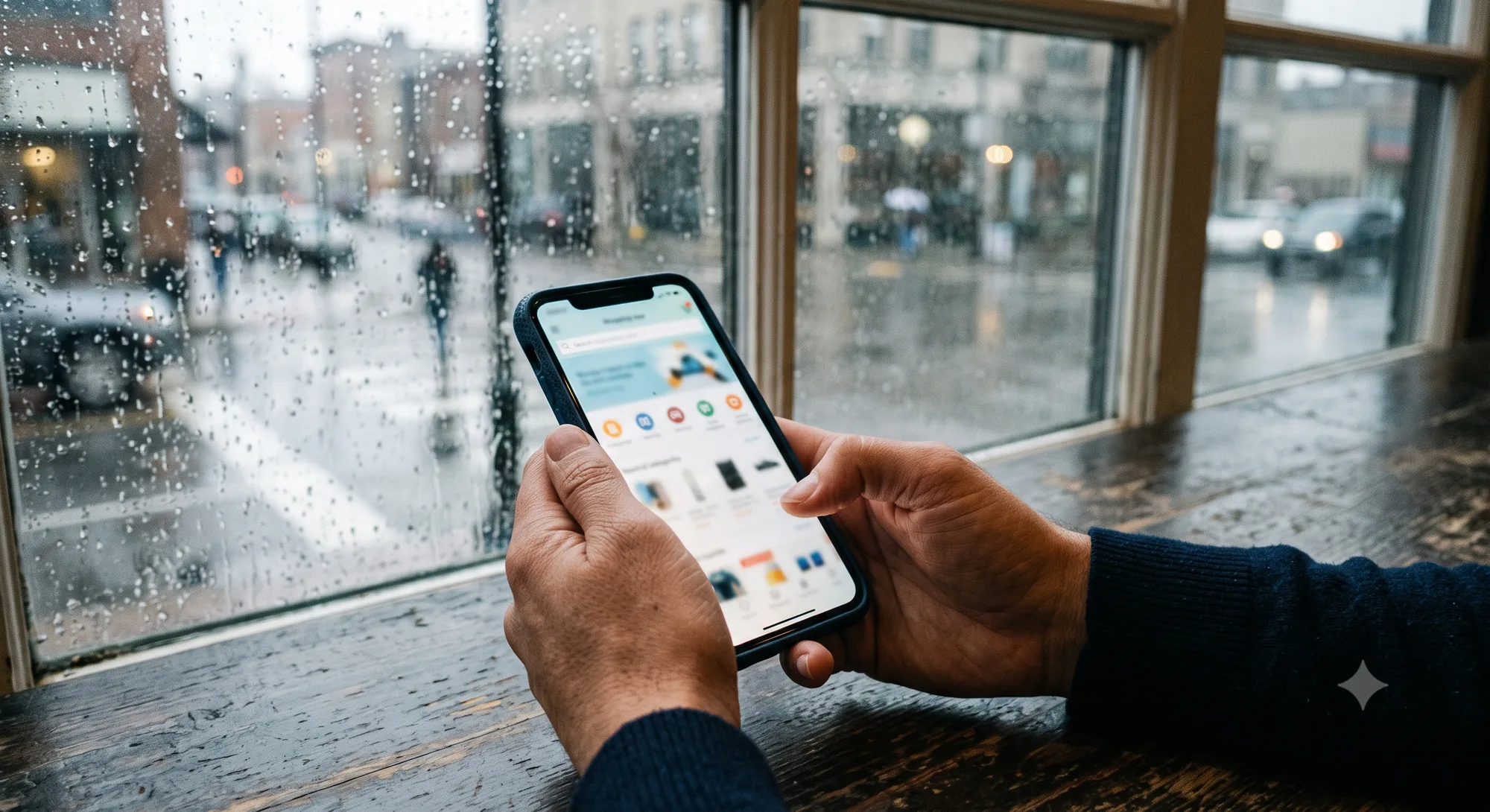
Customer demand doesn’t live inside a dashboard. A local event can change what people need that week. Regional buying patterns shift which products deserve attention. Weather alone can move urgency, category interest, delivery expectations, and which products customers even notice first. Nobody’s clicking “add to cart” on a snow shovel in July, no matter how good the ad is.
For brands selling products shaped by local conditions or seasonal need, ecommerce weather insights can connect campaign timing, promotions, and inventory decisions to what customers are actually dealing with outside. The upside is measurable: one national retailer that aligned warmwear and hot-beverage promotions with regional cold fronts saw a 12.2% lift in foot traffic, more than 94,000 incremental store visits, according to The Weather Company. Outdoor gear, home goods, apparel, grocery delivery: a retailer in any of those categories might need completely different messaging in different markets on the exact same day.
It’s not about reacting to every signal that comes in. It’s about knowing which ones actually shift customer intent, then pairing those against your own performance data. That combination is what makes timing feel strategic instead of just reactive.
Assuming every channel moves at the same speed
Campaign timing gets messy fast once every channel is forced onto one schedule. Paid search captures active intent almost immediately. A blog post, an influencer partnership, an email sequence, an organic social push: these need real runway to build awareness before anyone’s actually ready to buy.
This is usually where it falls apart. Teams launch everything at once, then judge every channel against the same short window. Slower channels end up looking weak, even while they’re quietly doing the work of introducing the product, shaping demand, or bringing people back later on.
Give each channel a clear job instead:
- SEO and content: support early research, well before anyone's ready to buy.
- Paid social: test creative angles and build out retargeting pools.
- Email: move warm audiences closer to purchase.
- Paid search: catch high-intent shoppers once demand is already active.
Line the rollout up with how each channel actually behaves, and the whole campaign starts to feel coordinated rather than scattered across a dozen unrelated moments.
Forgetting timing is part of the customer experience
Bad timing doesn’t only hurt campaign performance. It makes the entire customer experience feel disjointed, even when nothing else about the brand changed.
A shopper clicks an ad for a product that’s already low in stock. They get a discount email for something they bought last week. They land on a page that doesn’t match the offer they just clicked. Any one of those moments is forgettable on its own. Stack a few of them together, though, and the brand starts to feel disorganized.
Good timing keeps every touchpoint connected: the offer matches product availability, the landing page reflects the campaign message, and the follow-up actually makes sense given where the customer is in the process. The promotion shows up when there’s a real reason to care, not just because it’s scheduled. Get that right and customers feel like they’re moving down one clear path instead of getting bounced between messages that don’t quite match.
Common questions about campaign timing
When should ecommerce brands start a seasonal campaign?
Earlier than the calendar suggests, particularly for products that need research or a bit of trust before someone buys. Warming up an audience through content, paid social, or email before demand actually peaks means the final campaign has far less convincing left to do.
What should ecommerce teams track besides campaign metrics?
Clicks and conversion rates show what happened inside a campaign, not why it happened. Local demand, competitor activity, shipping timing, and even weather all shape buying behavior in ways a dashboard alone won’t show, so pairing internal data with that outside context gives a much clearer read on performance.
How do you know if a campaign launched too early or too late?
Watch what happens after launch, not only at launch. If shoppers have already compared prices or moved on by the time a campaign goes live, it’s late. If engagement stays flat because there’s no real reason to care yet, it’s early.
Does weather actually affect ecommerce sales?
Yes, to a real degree. One national retailer that aligned promotions with regional cold fronts saw a 12.2% lift in foot traffic, over 94,000 incremental store visits, according to The Weather Company. Weather can shift urgency, category interest, and even which products customers notice first, especially for outdoor gear, apparel, home goods, and grocery delivery. It won’t explain every swing in sales on its own, but it’s one more outside signal worth watching alongside campaign data.
Make timing part of the strategy, not an afterthought
Timing isn’t a checkbox, and it’s not something to figure out last, right before launch. It determines who sees the message, when they see it, how relevant it feels in the moment, and how ready the business actually is for the demand that follows.
The strongest ecommerce campaigns build timing in from day one instead of bolting it on later. That means factoring in customer behavior, channel readiness, product availability, seasonal patterns, and the outside signals that can shift demand without much warning. It also means knowing when to build awareness, when to hold back a little, and when to push hard for the conversion.
None of this requires chasing every trend or rebuilding a campaign on the fly. It mostly comes down to a clearer read on what customers actually need, where they are in the buying journey, and what might tip their decision at that exact moment.
Get timing right, and a campaign stops just filling a slot on the calendar. It starts meeting people when they’re actually ready to buy.