



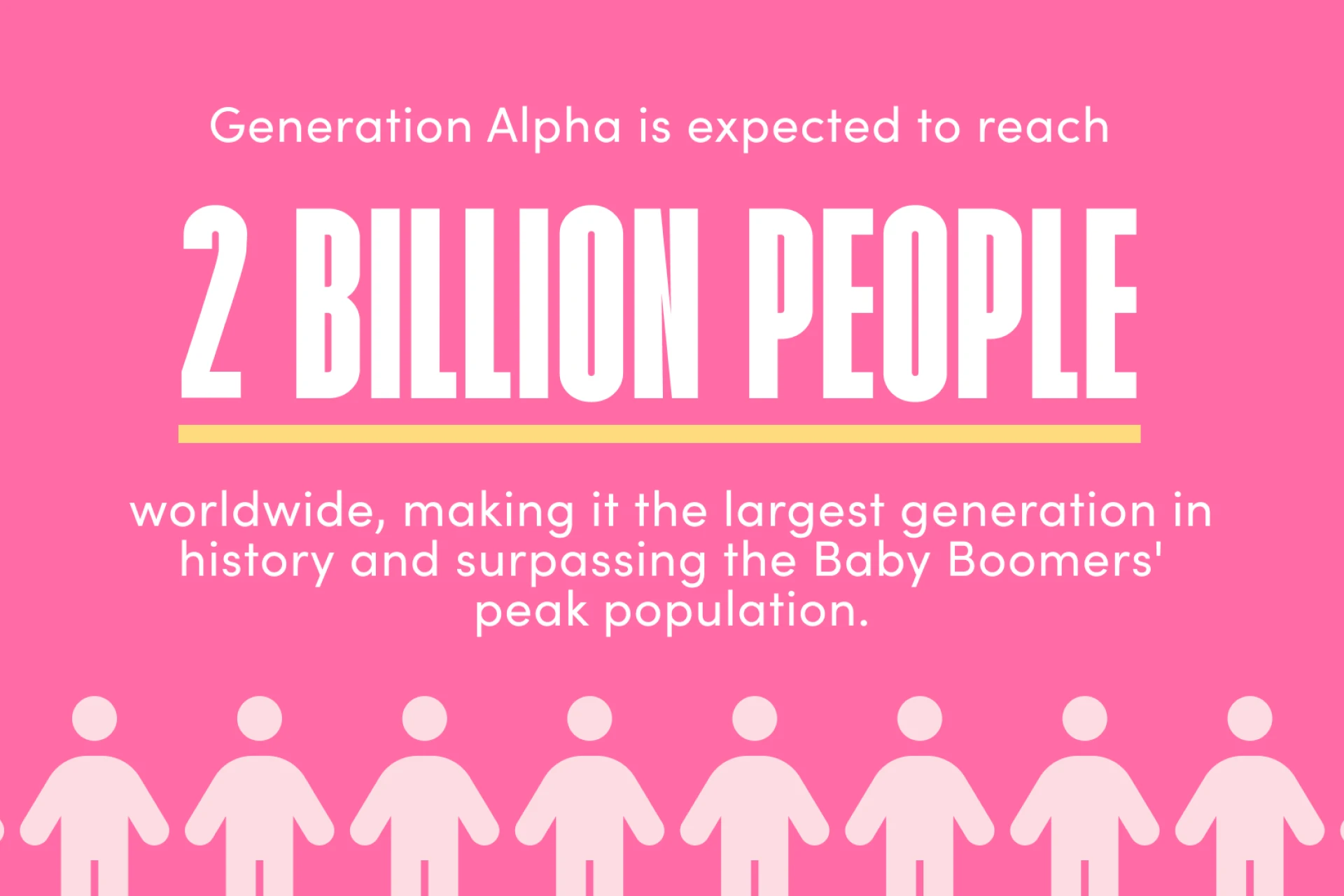
Master Gen Alpha marketing with our guide to Generation Alpha characteristics and traits. As the youngest and most tech-savvy consumers, they are already shaping marketing strategies from the high chair. To reach them, brands must think like creators, act like educators, and play like friends. Generation Alpha is expected to reach 2 billion people worldwide, making it the largest generation in history and surpassing the Baby Boomers' peak population.
Behavioral profile: born digital and programmed for influence
Generation Alpha, generally defined as born between 2010 and 2025, is the first generation raised entirely in a digital-first world. These digital natives have been swiping, tapping, and streaming since before they could walk.
While many Gen Alpha kids may still be preliterate, they’re already highly brand aware. According to a 2024 Morning Consult report, 67% of Gen Alpha kids recognize logos before they can even read.
This generation develops emotional connections with characters and creators early, often via repetitive video content and social media platforms like YouTube Kids or Roblox. Gen Alpha's relationship with brands is intuitive, playful, and rooted in emotional connection rather than logic.
Marketing to Gen Alpha involves reaching both the child who ignites interest and the millennial parents who hold the actual purchasing power. This digitally native generation significantly influences household purchases, even as the youngest consumers.
What qualifies you as Gen Alpha?
To understand Gen Alpha in marketing, one must look at the birth years. Anyone born from 2010 to the mid-2020s qualifies as a member of Generation Alpha. This distinguishes them from Gen Z, who were born starting in the late 1990s.
While Gen Z grew up as technology was evolving, Gen Alphas have never known a world without high-speed internet or AI.
How is Gen Alpha different from Gen Z?
When comparing Gen Alpha vs Gen Z, the primary difference lies in their level of immersion.
Gen Z is often considered "mobile first," but Gen Alpha is "AI native" and "discovery first". Gen Z uses social media to connect with friends, while Gen Alpha uses these social media platforms as their primary search engines and shopping malls.
Gen Alpha's relationship with the digital world is more seamless, and they’re even more tech-savvy than the older generations that preceded them.
Discovery patterns: designing desire before they can spell it
For Gen Alpha, discovery doesn’t begin with a traditional Google search: it starts with a swipe, a tap, or a voice command.
As the first generation born into a truly digital world, Gen Alpha consumes content through social media platforms, smart TVs, and shared household devices.
What exactly catches the attention of Gen Alpha kids? Their discovery habits are often accidental and driven by the latest trends. Gen Alpha's relationship with digital content is constant, as they often have significant screen time on a variety of devices.
Key channels for Gen Alpha today
- YouTube Kids: This remains the primary hub for Gen Alpha to consume video content.
- Roblox: This platform is a great example of where Gen Alpha consumers spend their time playing and socializing.
- Smart TV ecosystems: Apps like Netflix Kids and Disney+ are where many Gen Alpha kids first discover products.
- Voice assistants: Alexa and Google Gemini are frequently used by Gen Alpha to play music or ask questions.
- Pinterest: Increasingly used by the older edge of Gen Alpha for self-expression and aesthetic inspiration.
Conversion psychology: build playgrounds, not campaigns
Gen Alpha's path to purchase is emotional rather than linear. These younger consumers care less about technical specs and more about characters, colors, and feelings than any other generation.
However, millennial parents make the final call, so digital marketing strategies must win both audiences simultaneously.
Why do marketers find Generation Alpha attractive?
Marketers find Generation Alpha attractive because of their massive future consumer potential and their current influence on household buying decisions. Gen Alpha already has a say in what food, toys, and even electronics enter the home. By building brand affinity now, marketers can secure customer loyalty that lasts for decades.
What are the Gen Alpha brands?
Several brands have already mastered target Gen Alpha strategies. A great example is Sour Patch Kids, which has used video content and gaming integrations to reach Gen Alpha kids effectively.
Other brands like Lego and various SaaS marketing tools for education have built strong brand loyalty by focusing on edutainment.
Digital marketing strategies: make it playable, snackable, and shareable
To win Gen Alpha today, brands must shift from traditional campaigns to digital ecosystems. This generation expects experiences that feel native, whether it’s a Roblox mission or a YouTube adventure. Your digital marketing must play as much as it persuades.
The best marketing strategies combine story, interactivity, and emotional pull. Think kid-safe microsites, gamified discovery, and character-led narratives that spark brand affinity. Every touchpoint must reach both the child and the parent.
The 4 p's of marketing for kids
When explaining marketing to a kid or a student, the 4 Ps remain relevant but shifted:
- Product: It must be fun and functional.
- Price: It must provide value to the Gen Alpha parents.
- Place: It must be where they play, like Roblox or YouTube.
- Promotion: It must feel like entertainment, often through influencer marketing or user-generated content.
TIA Tip: Friction arises when brands over-personalize without permission, include in-app purchases without clear warnings, or feature content that feels "too commercial" to adult viewers.
AI in action: How AI is transforming strategy
Gen Alpha uses technology with ease, not for novelty, but because it’s simply how their world works. Nearly half of kids ages seven to 14 already use AI for entertainment and homework.
For marketers, that means digital marketing strategies must feel like magic.
Contextual personalization, not profiling
AI lets brands personalize without risking privacy, which is a must for kid-focused digital marketing. By adapting to household patterns and age-appropriate cues, content feels tailored rather than intrusive. This allows brands to stay ahead of the latest trends while maintaining a competitive advantage.
AI-powered parent tools
AI shapes not only what Gen Alpha consumes but also how millennial parents decide. Quizzes and safety filters guide choices with less effort, making AI a powerful driver of trust. When brands use technology to help Gen Alpha's parents, they quickly build brand loyalty.

Image source: Freepik
Gen Alpha: A snapshot
Campaign insight: from curiosity to cart
For a recent toy launch, The Influence Agency bridged playful discovery with the parent purchase. Our team used AI to map peak family screen time, pairing YouTube Kids drops with dynamic social media ads. The creative assets were auto-adjusted based on engagement, driving a 21% lift in conversions.
This results-oriented approach is part of our full-service agency philosophy. By leveraging our network of influencers, we help brands create authentic campaigns that resonate with Gen Alpha consumers.
Strategy highlight: 3 moves to make
Today's youngest audiences are already scrolling across worlds. To reach Gen Alpha and their millennial parents, brands need interactive strategies.
Here are three ways to turn discovery into demand:
1. Turn search into story
Instead of waiting to be searched, embed your brand into where Gen Alpha already is: inside stories and games. Use characters and mini-quests to build discovery-first journeys across social media platforms and smart devices.
2. Co-target Gen Alpha’s parents
Every kid has a co-buyer. Pair playful videos for Gen Alpha kids with info-rich content for Gen Alpha's parents. With many millennial parents comfortable with their child's spending influence, this dual-path strategy is essential.
3. Gamify education
Build brand microsites that turn product features into play. As a socially conscious generation, Gen Alpha is already beginning to mirror its parents' interests in topics like social justice and sustainability.
They appreciate learning, so turn your marketing into a shared moment of trust and delight. Using user-generated content can also help build brand affinity at a young age.
The most effective marketing strategies for this group will bridge the gap between digital play and real-life impact, turning online engagement into tangible world-building.
FAQs about Gen Alpha marketing
Key takeaways
Navigating Gen Alpha’s landscape with purpose and play
Gen Alpha is the first fully digital generation. These kids drive desire through playful discovery, while millennial parents control the spending power.
Trust is earned through creative storytelling and compliance with regulations like COPPA and Ad Standards, which safeguard how Gen Alpha kids are engaged online. To stay ahead, brands must build story-led, gamified, and educational ecosystems.
The primary goal of these Gen Alpha marketing strategies is to move engagement from the screen into real life. Unlike previous generations, which separated digital and physical spaces, Gen Alpha consumers see them as a single, seamless ecosystem. By prioritizing joyful, safe, and co-engaging experiences that touch on values like social justice, brands can build a competitive advantage that secures long-term customer loyalty.
The goal is to win both the child and the parent by providing value and entertainment that respects the mental health and well-being of the next generation.
Is your brand ready to connect with the next generation of consumers? Explore our influencer marketing services to see how we can help you build authentic campaigns that resonate with Gen Alpha and beyond.