


The linear marketing funnel has evolved into a complex consumer journey that varies widely across Gen Alpha and Baby Boomers. Learn how to optimize your digital marketing funnel stages to build authentic trust, engage diverse audiences, and drive the measurable success your brand deserves.
The traditional marketing funnel, built on the classic AIDA model (Awareness, Interest, Desire, and Action), no longer applies uniformly across all audiences. In today’s digital landscape, the consumer journey funnel is rarely a straight line. Instead, potential customers loop between various funnel stages, often revisiting the consideration stage and only converting when trust is fully established, rather than when a rigid funnel model suggests they should.
Each generation’s consumer behavior shapes a unique path to purchase. These paths are influenced by distinct triggers, platforms, and social proof points.
This overview reframes the traditional marketing funnel into generational influence loops and explores how modern marketing tactics and AI allow brands to act on real behavioral signals rather than outdated demographic assumptions.
What is the marketing funnel?
Before diving into generational differences, we must define the core concept. A marketing funnel is a conceptual model that illustrates the customer journey from the moment a person learns about a brand to the point they make a purchase. It’s often referred to interchangeably as a sales funnel or a purchase funnel.
In a typical funnel model, the process is pretty straightforward: it begins with a big pool of potential customers at the top and gradually narrows down to a smaller group of paying customers at the bottom.
However, the modern buyer's journey has become far more complex, requiring a digital marketing funnel that is flexible and responsive.
The 5 stages of the marketing funnel
While different experts may categorize them slightly differently, the most common framework includes these five stages of the marketing funnel:
- Awareness stage: This is the top of the funnel where potential customers first discover your brand through social media campaigns, paid ads, or SEO.
- Consideration stage: Here, the audience evaluates your offerings against competitors. They may read blog posts, review products, or engage with email marketing.
- Conversion stage: Also known as the purchase stage, this is where the lead generation funnel transforms a prospect into a paying customer.
- Loyalty stage: Following the initial purchase, the focus shifts to customer retention and building brand loyalty.
- Advocacy stage: Satisfied customers become brand advocates, sharing user-generated content and driving new customers through word of mouth.
The customer journey: Mapping influence loops by age
The modern consumer funnel is dynamic. Different generations navigate the digital marketing funnel in unique ways, influenced by their preferred social media platforms and trust mechanisms.
From Gen Alpha’s gamified experiences to Baby Boomers’ reliance on simplicity, the customer journey funnel loops and skips stages depending on social proof.
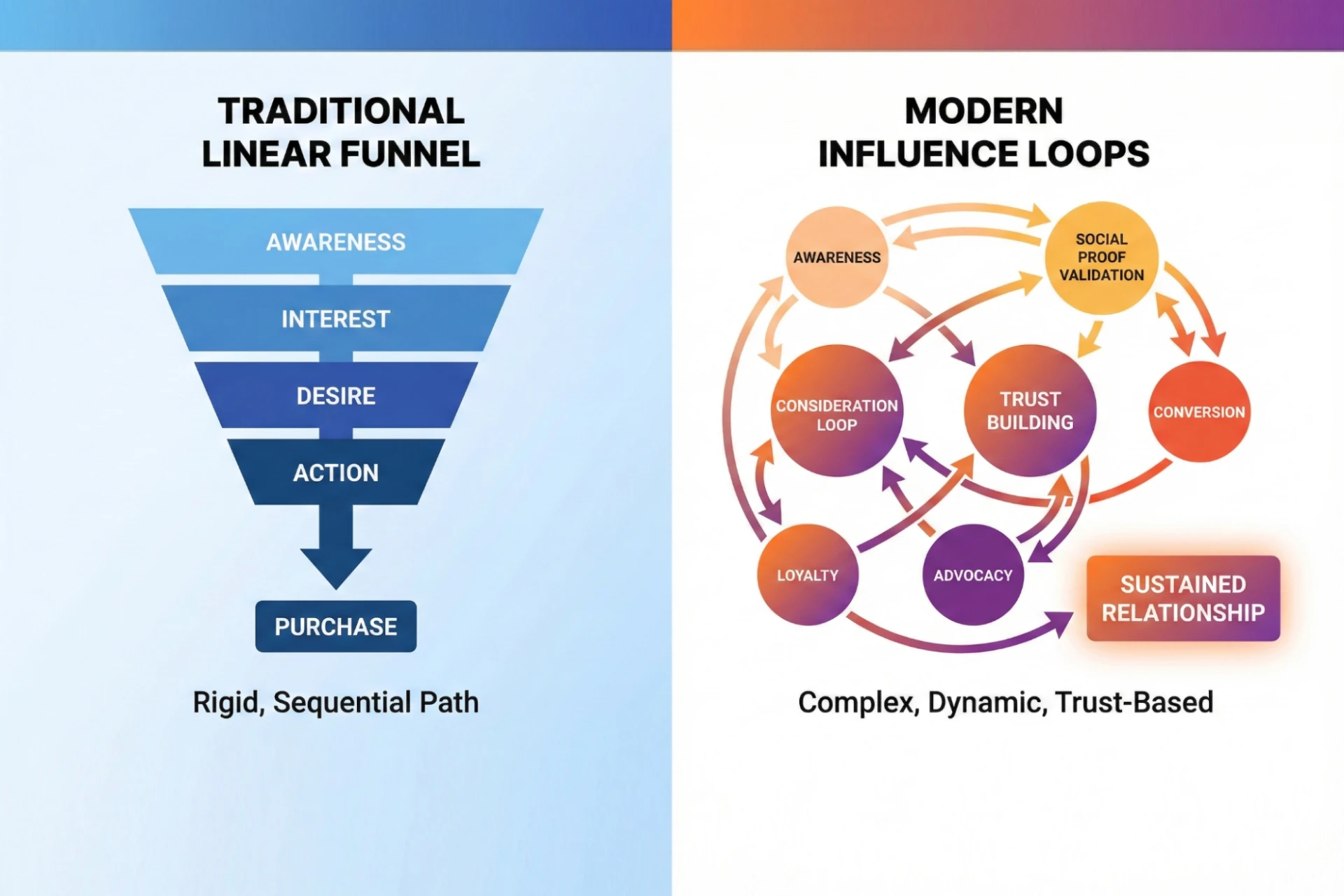
Image Source: AI-Generated
Gen Alpha: Digital natives
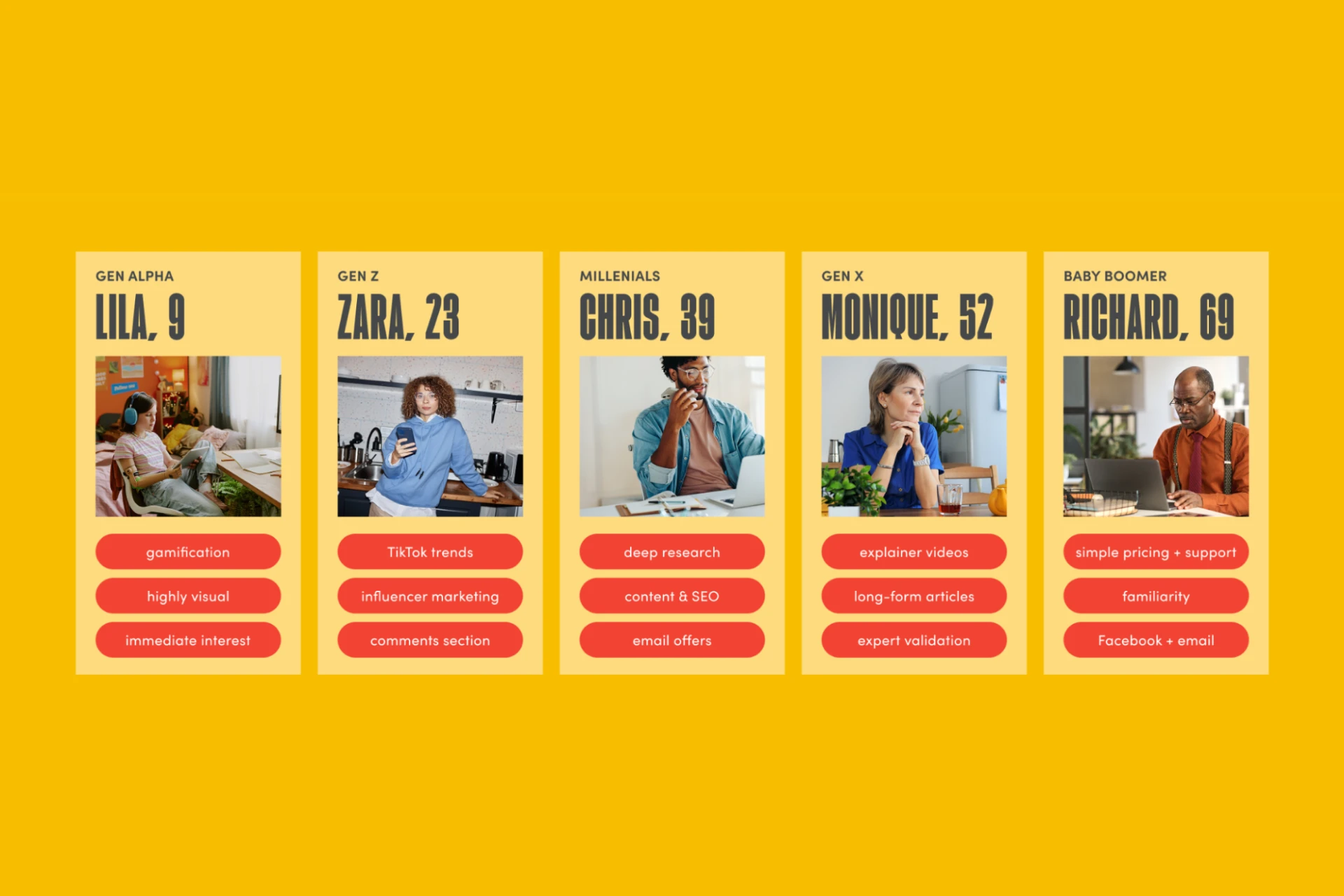
Lila, age 9
Lila knows how to navigate YouTube Kids better than her grandparents navigate a basic Google search. To her, a brand is often synonymous with a Roblox experience or a trending animation. She does not see a traditional funnel; she sees an interactive playground.
- Path to influence: A child sees content, repeats exposure through play, talks about it with peers, and then the parent recognizes the brand.
- Marketing strategy: Focus on gamification and highly visual marketing materials that capture immediate interest.
Gen Z: Social proof seekers
Zara, age 23
Zara scrolls TikTok faster than most people scroll Instagram. She primarily trusts brands that are trending with the creators she follows. She is a master at skipping ads but will notice products her friends hype in their "get ready with me" videos.
- Path to influence: Discovers a product on TikTok, validates the brand in the comments section, feels a sense of alignment, and converts via a creator link.
- Key tactics: Leveraging our network of influencers to build authentic social proof is essential for this demographic.
Millennials: Researchers
Chris, age 39
Chris compares options across multiple platforms before committing his hard-earned money. He reads reviews, in-depth blogs, and case studies. While he may ignore most paid ads, he will click on marketing messages in emails that offer genuine insights.
- Path to influence: Searches for a specific need, compares brands across platforms, reads blog content, and eventually converts after a trust-building email offer.
- Key tactics: Content marketing and SEO are vital here to ensure your brand appears during their deep research phase.
Gen X: Credibility hunters
Monique, age 52
Monique researches deeply and cares very little about fleeting trends. She prefers long-form articles, explainer videos, and webinars. For Monique, credibility and expert validation are the primary drivers of her consumer behavior.
- Path to influence: Identifies a problem, conducts a thorough Google search, watches an explainer video, and confirms credibility through third-party reviews.
- Key tactics: High-quality video production and detailed industry updates help establish the authority Monique requires.
Baby Boomers: The trust traditionalists
Richard, age 69
Richard seeks simplicity and high levels of trust. He is most likely to click on familiar brands via Facebook or email marketing. He values clear pricing, easy to find support pages, and the ability to call for human confirmation.
- Path to influence: Sees a familiar brand on Facebook, clicks for more information, reads a support page, and converts only after receiving reassurance of safety and value.
- Key tactics: Focus on customer satisfaction and clear, concise marketing messages that emphasize reliability.
How AI rewires the funnel for moments, not just personas
While the traditional marketing funnel assumes a linear path, AI allows brands to move beyond static customer funnels. By analyzing user behavior, device type, and even dwell time, AI can dynamically adjust marketing materials and offers in real time.
This technology helps move qualified leads through the conversion stage by meeting them at precise behavioral moments. Modern marketing tactics ensure we not only gain new customers but also retain them for the long term. By responding to user feedback and engagement patterns, AI helps foster sustained growth and brand loyalty.
In short: Don’t just build for personas. Build with AI for moments, and watch repeat purchases, brand advocates, and long-term relationships grow.
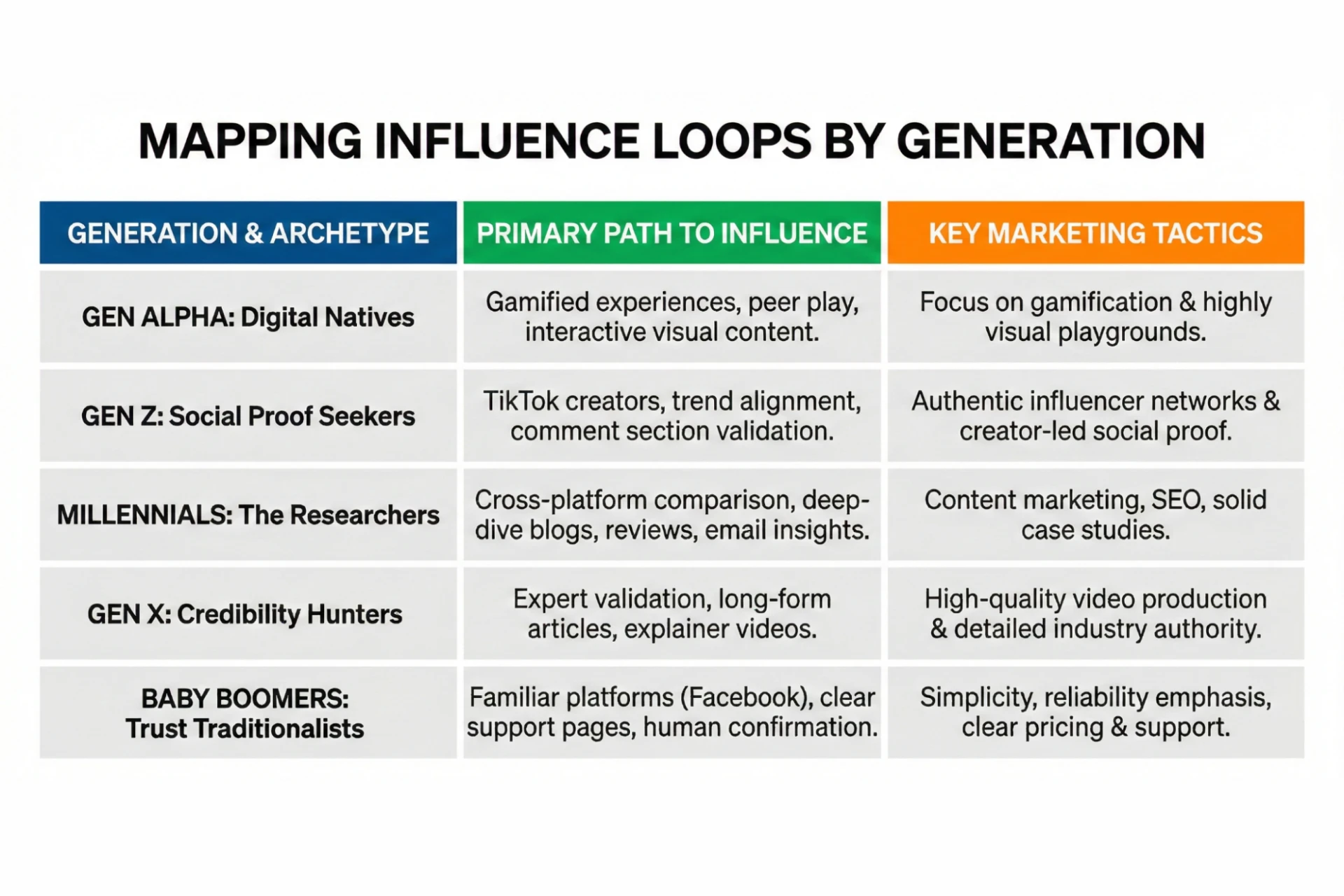
Image Source: AI-Generated
FAQs about the digital marketing funnel
Key Takeaways
The funnel isn’t dead. It’s evolving.
The marketing funnel isn't broken; it’s evolving. A successful marketing strategy must reflect both generational context and the opportunities provided by AI. Today’s consumer journey funnel isn’t segmented by age alone but by behavioral nuance, engagement patterns, and real-time moments.
The digital landscape is shifting, but your brand does not have to be left behind. At The Influence Agency, we specialize in building comprehensive strategies that resonate with every generation, from Gen Alpha to Baby Boomers.
Ready to see how a custom strategy can rewire your results? Explore our content marketing services to start building authentic connections that drive action.
The funnel isn’t broken; it just needs to be rewired for relevance.