


This post breaks down 10 essential prompts for long-form content that help you structure stronger articles, improve clarity, and strengthen E-E-A-T. These prompts guide AI to produce well-organized, credible, and engaging pieces, making content creation easier for beginners and more strategic for marketers.
Instead of staring at a blank content calendar, the right prompts can turn loose ideas into clear, compelling articles built for audience engagement and search visibility. The key is knowing how to prompt large language models effectively, especially for AI Overviews and E-E-A-T (Experience, Expertise, Authoritativeness, Trustworthiness).
Below are 10 prompts for long-form content that act as the scaffolding for polished, high-authority writing.
Whether you’re a marketer scaling output or a creator improving your search engine optimization, these AI prompts will help you quickly move from blinking cursor to fully formed article.
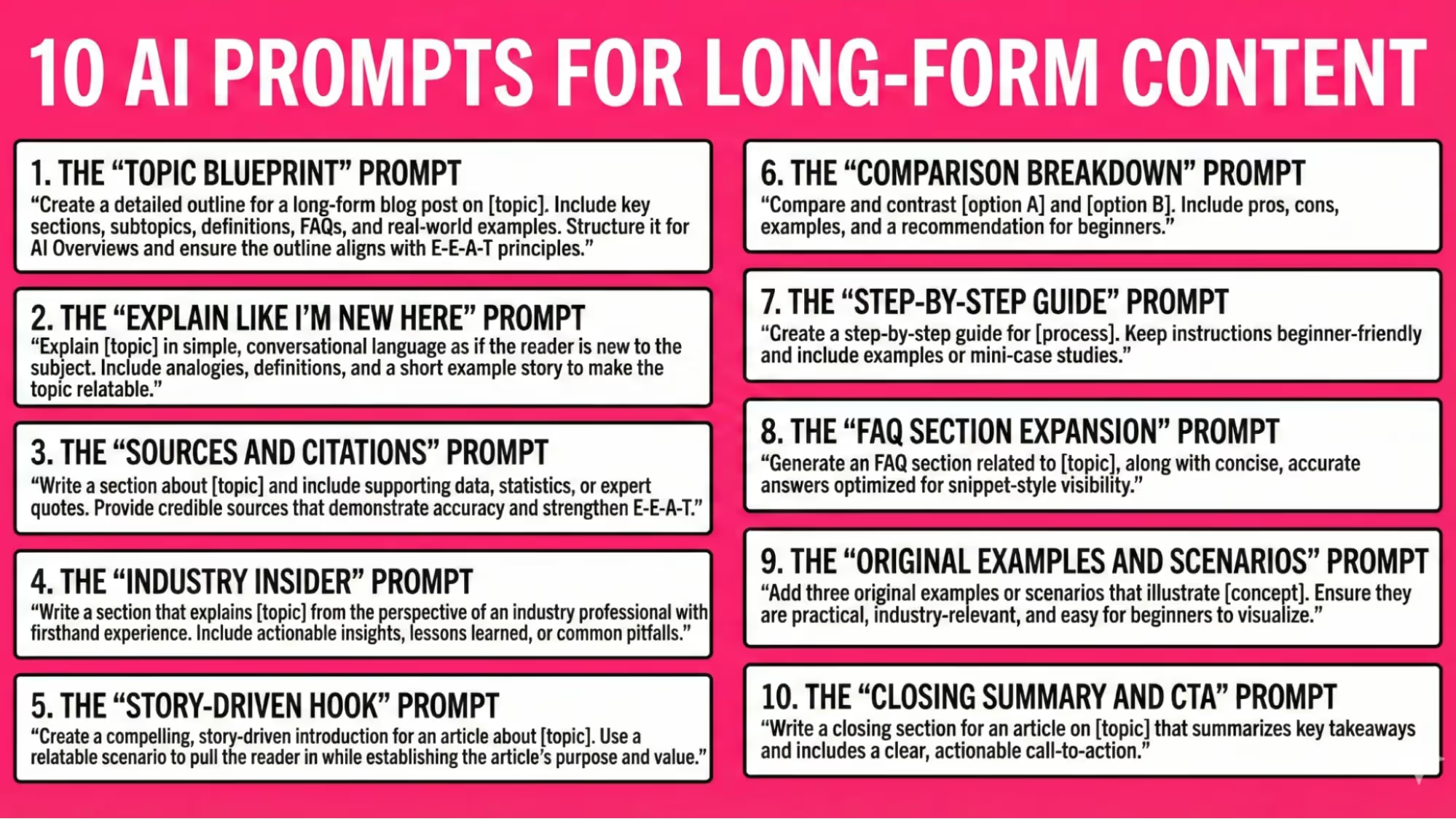
1. The "Topic Blueprint" Prompt
This is your starting point. This prompt solves “where do I begin?” frustration by mapping out the entire article before you write a single paragraph.
“Create a detailed outline for a long-form blog post on [topic]. Include key sections, subtopics, definitions, FAQs, and real-world examples. Structure it for AI Overviews and ensure the outline aligns with E-E-A-T principles.”
Why it works: A strong outline keeps your content digestible for search engines and, more importantly, for the humans reading it.
2. The “Explain Like I’m New Here” Prompt
Ideal for beginner audiences seeking clarity without oversimplification.
“Explain [topic] in simple, conversational language as if the reader is new to the subject. Include analogies, definitions, and a short example story to make the topic relatable.”
Why it works: AI Overviews prioritize content that directly answers questions. This prompt provides exactly that.
3. The “Sources and Citations” Prompt
There is nothing worse than reading a statistic that feels "off" and having no way to check it. High-authority and relevant content rely on verification; this prompt ensures you have facts to back up your claims.
“Write a section about [topic] and include supporting data, statistics, or expert quotes. Provide credible sources that demonstrate accuracy and strengthen E-E-A-T.”
Why it works: Including citations signals expertise and reliability, two factors that support better ranking and user trust.
4. The “Industry Insider” Prompt
Generic AI content reads like an encyclopedia entry. This prompt leverages experience to elevate your writing.
“Write a section that explains [topic] from the perspective of an industry professional with firsthand experience. Include actionable insights, lessons learned, or common pitfalls.”
Why it works: Google prefers content that showcases lived experience and key insights, rather than just scraped knowledge.

Image Source: Pexels
5. The “Story-Driven Hook” Prompt
Long-form content needs a reason for the target audience to continue. This prompt hooks your reader from the get-go, reeling them in for the entire piece.
“Create a compelling, story-driven introduction for an article about [topic]. Use a relatable scenario to pull the reader in while establishing the article’s purpose and value.”
Why it works: Humans are hardwired for stories. We connect with narratives first, and facts second.
6. The “Comparison Breakdown” Prompt
This prompt helps you become the fix that ends frustration for your readers.
“Compare and contrast [option A] and [option B]. Include pros, cons, examples, and a recommendation for beginners.”
Why it works: Structured comparison charts are gold for AI Overviews. They are list-friendly and snippet-ready.
7. The “Step-by-Step Guide” Prompt
This prompt ensures that your long-form content covers every step and doesn’t overlook any details.
“Create a step-by-step guide for [process]. Keep instructions beginner-friendly and include examples or mini-case studies.”
Why it works: Guides satisfy that "how-to" itch. If you solve their problem, you become their go-to resource.
8. The “FAQ Section Expansion” Prompt
Frequently asked questions are great for AI Overviews and featured snippets.
“Generate an FAQ section related to [topic], along with concise, accurate answers optimized for snippet-style visibility.”
Why it works: FAQs match natural voice search behavior. It’s exactly how we talk to Siri, Gemini, or Alexa.
9. The “Original Examples and Scenarios” Prompt
Examples make ideas easier to understand and help readers picture how they work.
“Add three original examples or scenarios that illustrate [concept]. Ensure they are practical, industry-relevant, and easy for beginners to visualize.”
Why it works: Originality builds trust. It proves you aren't just regurgitating what everyone else has already said.
10. The “Closing Summary and CTA” Prompt
Many writers fizzle out at the end, but this is your chance to drive action.
“Write a closing section for an article on [topic] that summarizes key takeaways and includes a clear, actionable call-to-action.”
Why it works: A good CTA turns a passive reader ("That was nice") into a lead ("I need this!").
FAQs about prompts for long-form content
Key Takeaways
Ready for blogs that rank and convert? TIA’s got you
Whether you're building educational resources or thought-leadership pieces, strong prompts are the foundation of strong content. Each of the prompts above encourages clarity, structure, and that elusive "human touch" we all want.
Ranking is a tricky toss-up, and AI Overviews make the competition even crazier. You might be brilliant, but is your website speaking the language of machine learning?
The Influence Agency specializes in being the AI whisperer for your digital presence. We tailor SEO and AEO strategies to transform your content into an irresistible choice, delivering prominence, position, and persistent traffic where it matters most.
Don't just compete with AI. Command it. Contact us to chart your course.